20 years of factory experience——focusing on the production and sales of all types of furniture

Contemporary Dining Room Chairs: A Buyer’s Guide for Restaurant Owners

Choosing the right contemporary dining room chairs is one of the most impactful—yet often overlooked—decisions for any restaurant. Unlike home settings, where aesthetics or personal preference may lead the way, restaurant seating must juggle comfort, durability, brand alignment, cleanability, and operational flexibility.
Whether you’re opening a new bistro or revamping your current venue’s layout, this guide will help you confidently select contemporary dining room chairs that support your business—and your guests’ experience—for years to come.
Table of Contents
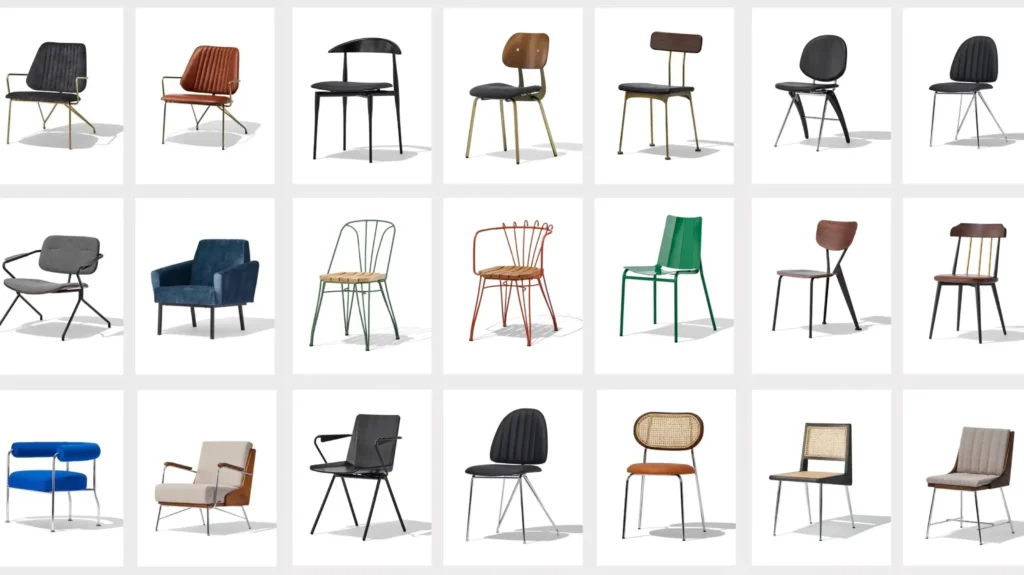
Why Contemporary Dining Room Chairs Matter in Commercial Settings
In a restaurant, the chair is where the guest spends 60–90 minutes (or longer). If it’s uncomfortable, they’ll notice—and remember. If it wobbles, squeaks, or stains easily, staff complaints and replacement costs add up fast. And if it clashes with your interior, it disrupts the story you’re trying to tell.
Contemporary dining room chairs—characterized by clean lines, minimalist silhouettes, and thoughtful material combinations—are especially well-suited for modern eateries. Their streamlined forms maximize visual space, while thoughtful ergonomics and robust construction support high-traffic use.
Let’s break down the five non-negotiable criteria for selecting the best options.
1. Comfort: Where Guests Stay Longer (And Spend More)
A comfortable chair doesn’t draw attention—it disappears. In restaurant design, that’s the highest praise.
Look for:
- Ergonomic back support (even in minimalist frames—lumbar curves or subtly angled backs make a big difference).
- Seat depth & height that align with standard dining tables (typically 18” seat height for 30” tabletops).
- Generous seat width (minimum 18–20”) for inclusivity and ease of movement.
- Light cushioning on hard-shell designs—e.g., molded plywood with a foam insert—offering support without overheating.
💡 Pro Tip: Always test chairs with clothing similar to what your guests wear (e.g., denim, dresses, suits). A chair that feels fine in slacks might pinch or slide in a dress.
For extended seating (e.g., wine bars, tasting menus), consider models with integrated armrests or semi-arm designs—they aid ingress/egress and convey premium positioning.
2. Atmosphere & Brand Alignment
Your chairs are silent ambassadors of your brand. A sleek black powder-coated metal chair says “urban bistro”; a warm walnut frame with cognac leather says “neighborhood steakhouse”; a stackable white polypropylene chair whispers “Scandi café”.
Ask yourself:
- Does the chair reinforce your cuisine, service style, and price point?
- Does it harmonize with flooring, lighting, and table materials (e.g., wood-on-wood can feel cozy or cluttered—context matters)?
- Can it transition smoothly between daytime (brunch crowds) and evening (moody, intimate)?
✅ Example: A fusion restaurant aiming for “modern yet grounded” might pair solid oak frames with textured charcoal upholstery—natural warmth meets contemporary edge.
Avoid overdesigning. In high-traffic venues, simplicity often reads as confidence—and ages more gracefully.
3. Durability: Built for the Long Haul
Restaurant chairs undergo daily stress: sliding, stacking, accidental kicks, weight loads (including bags/backpacks), and humidity changes. Prioritize:
| Material | Pros | Cons | Best For |
|---|---|---|---|
| Solid wood (oak, beech, walnut) | Timeless, repairable, high perceived value | Heavier, sensitive to moisture/swelling if unfinished | Upscale casual, farm-to-table, fine dining |
| Powder-coated steel/aluminum | Extremely durable, lightweight options, rust-resistant (if coated well) | Can feel “cold”; noisy if not fitted with glides | Industrial spaces, fast-casual, rooftop bars |
| High-density molded plastic (e.g., polypropylene) | Waterproof, UV-stable, stackable, low-cost | Lower prestige; may fade or crack over 5+ years | Outdoor dining, high-turnover cafés, pop-ups |
| Commercial-grade upholstered (high-resilience foam + Crypton®/TopGard® fabric) | Luxe comfort, acoustic softening | Requires vigilant cleaning; fabric choice is critical | Lounge areas, supper clubs, hotels |
⚠️ Red Flag: Avoid MDF or veneer-only frames in commercial use—they delaminate under humidity shifts and repeated cleaning.
4. Maintenance: Spills Happen—Make Cleanup Effortless
Think of your chair surfaces like countertops: the fewer seams, crevices, and porous materials, the easier the wipe-down.
- Leather (genuine or high-end vegan): Wipe with damp cloth; develops patina. Avoid cheap bonded leather—it peels.
- Crypton® or nano-treated fabrics: Liquid beads up; stains lift with mild soap. Ideal for food-heavy venues.
- Powder-coated metal: Non-porous—just wipe. Ensure no chipping at welded joints.
- Solid wood: Use sealed finishes (e.g., catalyzed varnish, hardwax oil). Unsealed = stain city.
Maintenance Hack: For upholstered models, specify removable, zipper-fastened seat cushions—they can be laundered or spot-cleaned separately.
Also consider floor protection: chair glides (not casters!) prevent scratches and reduce drag noise.
5. Flexibility & Space Efficiency
Your floor plan isn’t static. Private events, holiday rushes, or seasonal patio expansions demand adaptable seating.
Stackable vs. Nestable vs. Fixed
- Stackable chairs (up to 6–8 high): Save storage space. Ideal for banquet setups or multi-use rooms. Best with lightweight metal or plastic frames.
- Nestable chairs (slide under table when not in use): Maximize aisle clearance. Works well with tapered-leg designs.
- Fixed banquettes or benches: High seating density, low per-seat cost—but zero flexibility. Pair with mobile side chairs for hybrid setups.
Weight Matters
- Under 10 lbs: Easy for staff to reconfigure daily (great for pop-ups or event spaces).
- 12–18 lbs: Stable during service, still movable by one person (ideal for most full-service).
- 20+ lbs: Imposing presence, but requires team lifting—reserve for premium zones.
📐 Space-Saving Tip: Use side chairs (armless) along walls and armchairs only at ends or VIP tables. Saves ~4” per chair vs. full-arm models.
Popular Contemporary Dining Room Chairs by Material & Use Case
Let’s explore how different construction types serve real-world restaurant needs—with specific recommendations.
🪵 Solid Wood Contemporary Dining Room Chairs
Timeless, warm, and repairable—wood remains a top choice for venues prioritizing authenticity.
- Best for: Farm-to-table, wine bars, brasseries
- Top styles:
- Wishbone-inspired Y-chair (with woven or upholstered seat)
- Minimalist sled-base chair (no visible joints, easy to clean under)
- Tapered-leg side chair with molded plywood back
✅ Look for kiln-dried hardwood (not green lumber) and mortise-and-tenon joinery—not just screws.
Metal Frame Contemporary Dining Room Chairs
Industrial-chic, ultra-durable, and often the lightest commercial option.
- Best for: Fast-casual, coffee shops, rooftop terraces
- Top styles:
- Tubular steel with plywood seat (mid-century modern revival)
- Perforated sheet metal back + vinyl seat (breathable, wipeable)
- Wireframe chair (sculptural, stackable—e.g., Bertoia-style, but commercial-grade)
⚠️ Ensure welds are fully ground smooth—rough joints snag clothing and harbor grime.
Upholstered Contemporary Dining Room Chairs
Where comfort and ambiance converge. Not just for fine dining—smart choices work in high-turnover spots too.
- Best for: Fine dining, lounges, hotel restaurants, tasting menus
- Key specs:
- Foam density ≥ 2.5 lb/ft³ (resists permanent compression)
- Fabric rub count ≥ 50,000 double rubs (commercial minimum)
- Optional: COM (Customer’s Own Material) programs for brand colors
💡 Design trick: Use contrast welting or channel tufting to hide wear lines and add polish.
🪑 Plastic & Composite Contemporary Dining Room Chairs
Often underestimated—but engineered polymers have come a long way.
- Best for: Outdoor patios, cafés, student hangouts, seasonal pop-ups
- Top picks:
- Glass-fiber reinforced polypropylene (e.g., inspired by Eames but UV-stabilized)
- Recycled ocean plastic chairs (sustainability story + weatherproof)
Avoid thin, hollow-shell versions—they crack under load. Go for monobloc (single-mold) or reinforced ribbed backs.
Outdoor & Terrace-Friendly Options
If your “dining room” extends outside, your chairs must resist sun, rain, and temperature swings.
- Materials to trust:
- Powder-coated aluminum (not steel—rust risk)
- Teak or thermally modified wood (no oiling needed)
- All-weather wicker (HDPE resin, not natural rattan)
- Must-have features: Drainage holes in seats, non-slip feet, stackability for off-season storage.
Pair with water-repellent seat cushions that dry in <30 minutes.
🪑 Benches & Hybrid Seating
Maximize capacity without crowding. Use benches on walls, paired with lightweight chairs opposite.
- Smart combos:
- Fixed upholstered banquette + stackable metal side chairs
- Modular bench sections (reconfigurable for groups of 4/6/8)
- Backless bench + tall counter stools for bar-height tables
⚠️ Include cushion depth ≥ 4” and back support every 6–8 feet to prevent fatigue.
Wrapping Up: Invest in the Foundation
Your contemporary dining room chairs are more than furniture—they’re part of the guest journey. The right ones reduce staff fatigue, elevate perceived value, cut long-term costs, and help your space feel intentional.
Prioritize function without sacrificing form. In restaurant design, elegance isn’t about ornament—it’s about effortless experience. And that starts with where your guests sit.
Ready to narrow down options? Share your concept (e.g., “modern Thai bistro, 60 seats, indoor/outdoor”), and I’ll suggest 3 tailored chair profiles—including material specs and vendor considerations.