20 years of factory experience——focusing on the production and sales of all types of furniture

2026 Holiday Sourcing: Trends and innovation from top Chinese furniture manufacturers

Table of Contents
It might feel premature to discuss Christmas 2026 while you are still navigating the current fiscal year, but for your inventory strategy, that holiday season is already underway. While your average customer is browsing for immediate updates, successful merchandise managers are quietly working with Chinese furniture manufacturers to decide which dining sets will host family gatherings two years down the road. The window for high-volume furniture orders has shifted; relying on a traditional 12-month calendar is no longer sufficient to guarantee stock on the floor.

Nothing haunts a retailer quite like the “Inventory Ghost”—the perfect trend that you identified but couldn’t source in time to capture the margin. Post-pandemic supply chain adjustments have solidified a new reality where a 24-month sourcing cycle is becoming the industry standard for high-ticket items. According to recent logistics data, lead times for raw materials—specifically sustainable hardwoods and performance textiles—have extended significantly. Decisions made today directly dictate your ability to sell in late 2026.
This extended timeline is further complicated by a fundamental shift in what customers actually want to buy. Market indicators suggest a strong pivot away from disposable “fast furniture” toward an “heirloom-sturdy” aesthetic—pieces built to last decades rather than seasons. Consumers are increasingly asking questions about durability and origin, showing a willingness to pay a premium for items that justify their price point through longevity, provided the retailer can prove the value.
Capitalizing on this quality-first mindset requires backward-engineered planning. To ensure those premium sectionals land on your dock by November 2026, the design phase often needs to close before this current year ends. By mastering the new mechanics of 2026 Holiday Sourcing, you can align your open-to-buy budget with these long-lead realities, ensuring you aren’t left with empty slots on the showroom floor when demand peaks.
Predicting the 2026 Palette: Why ‘Butter Brass’ and ‘Deep Moss’ Will Dominate
For nearly a decade, “Cool Grey” was the safety net for retailers—a neutral that sold itself. However, market indicators suggest a sharp pivot for the 2026 holiday season as consumer preference moves away from sterile minimalism toward warmth and visual weight. If your warehouse is heavily stocked with industrial silvers and stark whites, now is the strategic moment to begin phasing out those SKUs to clear open-to-buy dollars for the incoming shift.
Replacements are emerging in the form of rich, grounding tones that prioritize comfort. “Butter Brass” is leading this charge—a matte, warm metallic that feels closer to candlelight than the high-shine gold of previous years. Pairing this with “Deep Moss,” a saturated green that acts as a new neutral, creates a living room aesthetic that feels established and permanent rather than temporary. Audit your current open orders using this transition guide:
- Phase Out (2024/2025): High-Gloss Chrome, Slate Grey, Stark White
- Buy In (2026): Butter Brass, Deep Moss/Forest, Unbleached Linen/Bone
Consumers are increasingly seeking pieces that feel like “heirlooms” immediately upon purchase, and these darker, warmer textures communicate durability and value. Sourcing these specific finishes requires precision; the specialized dyeing and plating processes often extend production timelines significantly. These lead times dictate the logistics of landing inventory on time.
The 2026 Sourcing Calendar: Why March is Your Dead-Line for Holiday Success
Excitement about the aesthetic shift toward Deep Moss velvets and Butter Brass accents means nothing if the container is stuck at port in mid-December. For independent retailers, the biggest risk in 2026 isn’t picking the wrong color; it’s missing the production window. Unlike domestic soft goods which can often be restocked within weeks, import furniture supply chains are rigid. To have a showroom floor ready for the November holiday rush, you must work backward from the delivery date, accounting for the specialized finishing times required for these new, warmer textures.
Successful inventory planning relies on a disciplined “Backward Sourcing Calendar.” The days of placing summer orders for holiday delivery are effectively over, particularly for case goods requiring complex kiln-drying or upholstery with specific metallic plating. Adhering to this timeline prevents the margin-killing nightmare of air-freighting heavy furniture to meet demand, ensuring your stock arrives before the holiday rush:
- January 2026: Finalize SKU selection and request “Golden Samples” (final prototypes) for approval.
- March 2026: The Point of No Return. Deposits must be paid to secure raw materials and factory floor space.
- August 2026: Goods should be “On Water.” Any later, and you risk standard customs delays eating into your sales window.
- November 2026: Inventory arrives at your warehouse for unboxing, quality checks, and merchandising.
While these dates seem rigid, you can build supply chain resilience by optimizing how you communicate with manufacturers. Reducing furniture lead times often comes down to strategic standardization. Instead of customizing every dimension of a sofa, consider using a supplier’s existing “stock frame” but upgrading the fabric to the trending 2026 palette. This “semi-custom” approach allows the factory to skip the engineering phase, often shaving 15% off the total production time without sacrificing the unique look your customer demands.
Securing your timeline is the first step in protecting your holiday revenue, but the second step involves the story behind the product. Once the logistics are locked, the next challenge is answering the increasingly common customer question regarding the ethical origins of these materials. Eco-conscious manufacturing is no longer just a bonus feature, but a requirement for the modern buyer.
Sourcing Sustainable Materials: How ‘Circular Design’ Wins the 2026 Consumer
Consumer trust in 2026 hinges on a product’s lifespan, not just its origin story. The driving force behind sustainable materials for furniture production 2026 is no longer just environmental guilt; it is a demand for measurable value. “Circular economy furniture design” has become a potent sales tool. Instead of selling items destined for a landfill, you are sourcing pieces designed for longevity, repair, and eventual disassembly. When a customer knows a chair can be easily reupholstered or a table leg replaced rather than discarded, the higher upfront price tag feels like a long-term investment rather than a temporary expense.
Durability is the partner to sustainability, specifically regarding the explosion of next-generation textiles. Modern performance fabrics have finally shed their rough, commercial reputation, offering the soft hand-feel of natural cotton or linen while utilizing recycled high-tenacity fibers. For your sales team, this translates technical specs into relatable “pet-proof” and “wine-proof” benefits. You aren’t just selling a sofa made from recycled plastics; you are selling a living room centerpiece that survives toddlers and golden retrievers without losing its aesthetic appeal.
Verify these claims and justify your margins by vetting your suppliers for these recognized badges of credibility:
- FSC-Certified Wood: Ensures timber comes from responsibly managed forests, a non-negotiable standard for premium wood furniture buyers.
- OEKO-TEX Standard 100: Guarantees fabrics are free from harmful chemicals, a crucial selling point for families with young children or sensitivities.
- Global Recycled Standard (GRS): Verifies the actual percentage of recycled content in those high-traffic performance rugs and upholstery.
Validating these materials protects your brand reputation, but stocking an entire showroom exclusively with high-end sustainable goods is rarely financially viable for the average retailer. The profit lies in the mix. Blending these premium pieces with volume drivers helps maintain a healthy bottom line.
Balancing Bulk vs. Artisan: The 2026 Hybrid Inventory Strategy
Relying solely on unique, high-ticket items creates a showroom that looks beautiful but turns over slowly, tying up your cash flow. Conversely, stocking only generic wholesale furniture invites a race to the bottom on price against big-box competitors. The most profitable retailers in 2026 will adopt a “High-Low” hybrid strategy, acting as curators rather than just warehouses. By anchoring your inventory with reliable volume drivers, you create the financial stability needed to take calculated risks on statement pieces that define your brand’s personality.
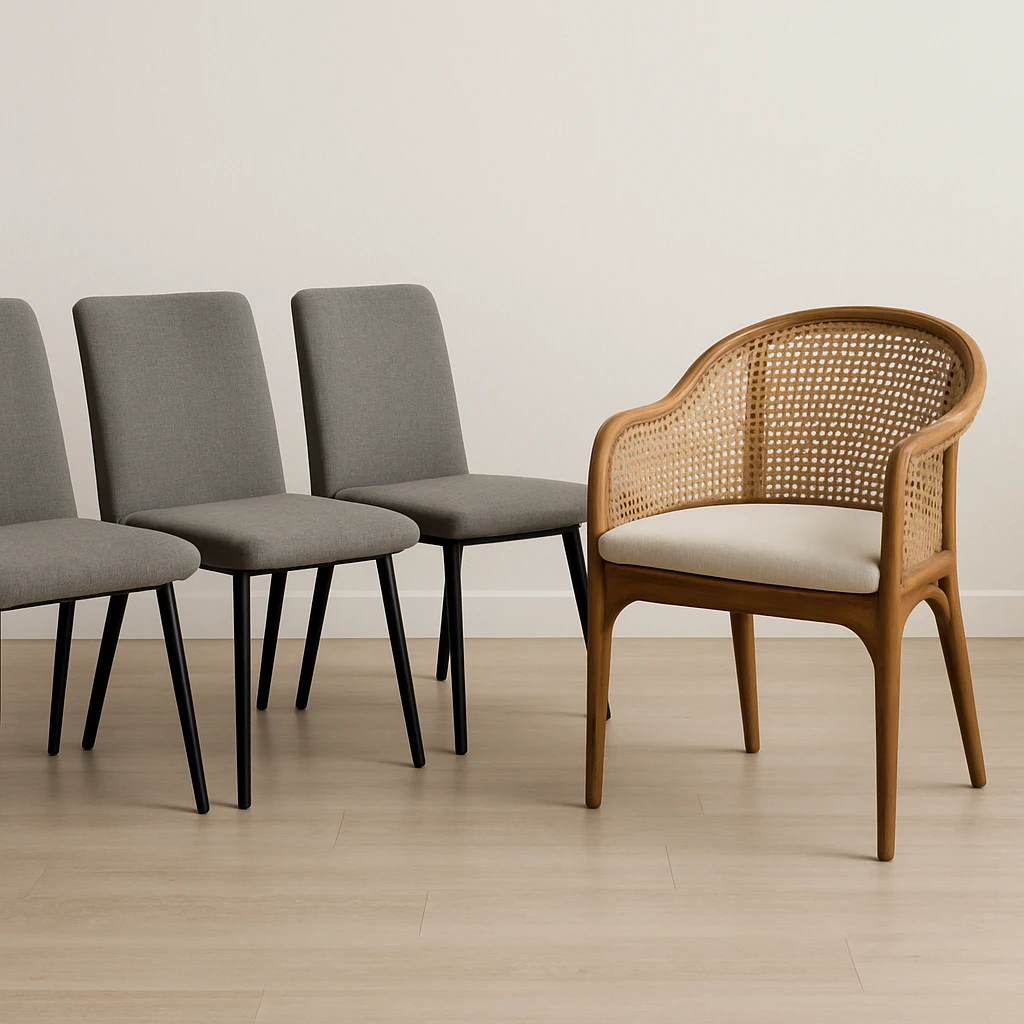
Your purchasing mix should reflect how customers actually furnish a room, balancing necessity with desire. Items that require multiples are your best candidates for volume sourcing; for instance, ordering bulk dining chairs allows you to offer competitive pricing on the essential “six-pack” seating purchase. These consistent sellers protect your margins, subsidizing the acquisition of lower-turnover, handcrafted artisan furniture like a live-edge dining table or a hand-carved sideboard. This specific pairing tells the customer they can afford the unique centerpiece because they saved money on the seating, effectively raising your average transaction value without scaring off price-sensitive buyers.
Executing this balance requires discipline, ideally aiming for an 80/20 split between reliable volume stock and distinct accent pieces. When you get this ratio right, the mass-produced items keep the lights on, while the unique finds build customer loyalty and drive social media shares. However, even the most balanced inventory must fit physically into the shrinking homes of the modern consumer. As living spaces tighten, your sourcing needs to solve a geometry problem as much as an aesthetic one.
Modular & Multifunctional: Solving the ‘Small Footprint’ Urban Living Trend
City dwellers are facing a reality check: square footage is expensive, but lifestyle expectations remain high. This mismatch drives the 2026 furniture consumer demand for pieces that multitask without looking temporary. Rather than selling “dorm room” compact furniture, successful retailers are sourcing high-quality items designed with a smaller footprint in mind. The goal is to offer inventory that makes a 600-square-foot apartment feel as functional as a suburban home, justifying a premium price point through utility rather than sheer size.
Sourcing strategies must now prioritize adaptability over static bulk. Modular furniture systems are the answer to this logistical puzzle, allowing customers to configure a sectional to fit a tight corner today and expand it for a larger home tomorrow. Simultaneously, the remote work revolution has matured; the “temporary” card table is out, replaced by ergonomic home office furniture trends that blend seamlessly into living spaces. When you stock desks that fold into elegant consoles or shelving units with integrated workspaces, you solve the customer’s need for productivity without sacrificing their aesthetic.
Capture this market by vetting your potential suppliers for specific functionality that adds tangible value. Look for these four “deal-closers” when reviewing product catalogs:
- Hidden Storage: Ottomans or chaises that store blankets to actively clear clutter.
- Reversible Configuration: Sectionals that can switch from left- to right-facing to fit any room layout.
- Scalability: Systems where single armless chairs can be purchased later to expand seating.
- Dual-Purpose Surfaces: Coffee tables that lift to become dining or work surfaces.
Once you have identified these high-utility designs, the next challenge is securing them without the volatility of trans-oceanic shipping, pointing many retailers toward a safer geographic solution.
Cutting costs and risks: Integrating Nearshore options with Chinese furniture manufacturers
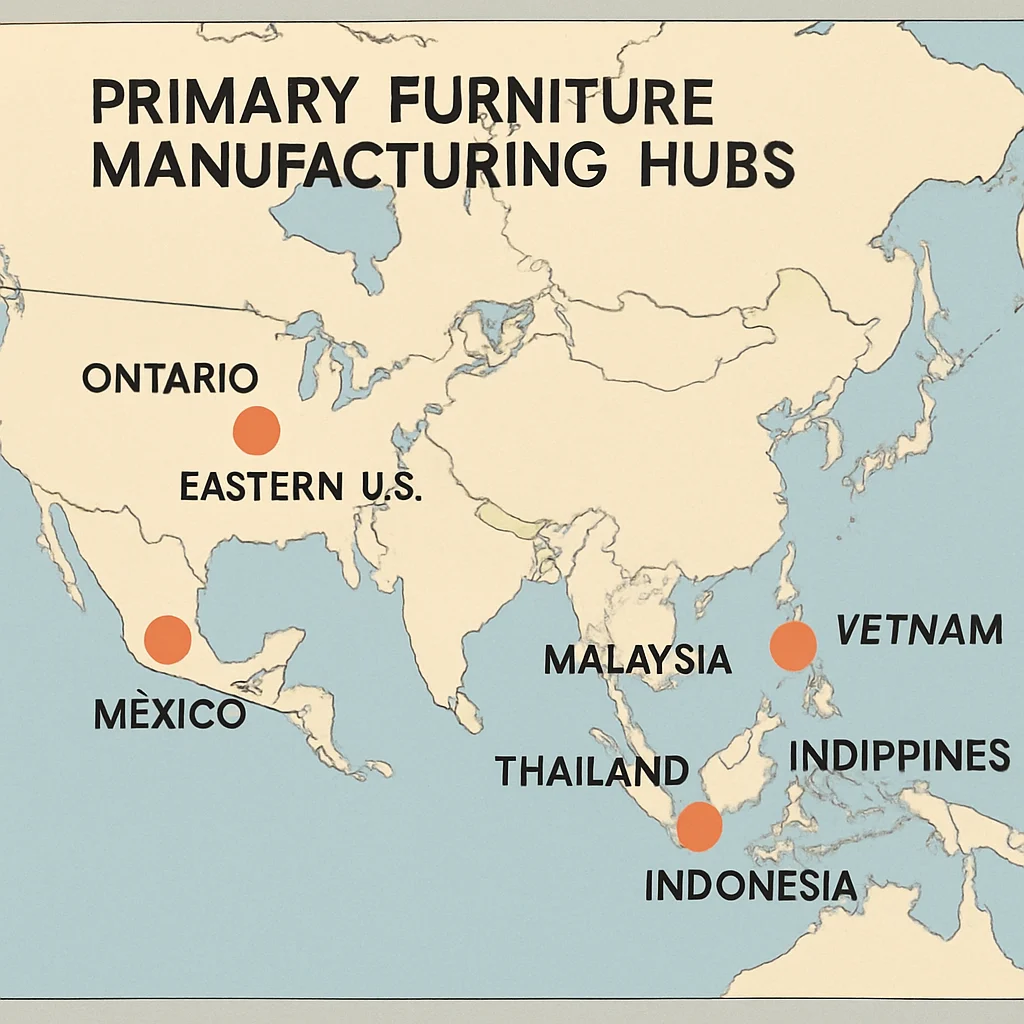
Finding the perfect modular sofa is a victory, but landing it on your dock in time for the holiday rush is the war. Relying exclusively on trans-oceanic shipments has become a gamble many independent retailers can no longer afford to take. This is where supply chain resilience moves from a corporate buzzword to a survival tactic. For the 2026 season, savvy buyers are pivoting toward “nearshoring”—shifting a portion of their production to manufacturers in Mexico or domestic hubs rather than relying solely on Asian factories. This strategy functions less like a simple vendor switch and more like an insurance policy against the unpredictable freight spikes that can erase your margins overnight.
While the sticker price per unit often remains lower in Vietnam or China, the comparison between offshore vs nearshore furniture manufacturing costs must look at the total landed cost. When you factor in the reduced transit time—often weeks by truck instead of months by sea—and the elimination of ocean freight tariffs, the financial gap narrows significantly. Nearshoring allows for smaller Minimum Order Quantities (MOQs) and faster replenishment cycles. If a particular velvet armchair unexpectedly sells out in November, a supplier in North Carolina or Monterrey can likely restock you before December 25th, whereas an overseas reorder is effectively gone for the season. You are trading a slightly higher manufacturing cost for the agility to capture sales you would otherwise lose.
Protection against disruption requires building a diverse furniture supplier network well before orders are placed. A robust strategy involves a “Plus One” approach: for every primary overseas supplier providing your high-volume core goods, secure a secondary regional partner capable of producing similar items. This diversification creates a necessary safety net. If a geopolitical event or port strike halts your main shipment, your regional backup ensures your showroom floor remains stocked during the critical fourth quarter. You maintain your reputation for reliability while competitors scramble for inventory, positioning your store as the dependable choice for holiday shoppers.
Once you have secured a reliable flow of inventory through a balanced supply chain, the final piece of the 2026 puzzle is helping the customer visualize these pieces in their own homes. With floor space at a premium and catalogs expanding, technology offers a way to showcase your full range without physically stocking every SKU. Retailers are increasingly turning to augmented reality tools to bridge the gap between a stocked warehouse and the customer’s living room.
Boosting Sales with AR: Preparing Your Inventory for an Augmented Reality Shopping Experience
Sourcing for 2026 requires adding a critical question to your vendor negotiations: “Do you provide 3D assets with this SKU?” Traditional catalogs are static, but the modern buyer expects to visualize a velvet sectional in their actual living room before committing to the purchase. This is the era of digital-ready inventory, where the most valuable suppliers are those who deliver high-quality digital twins alongside the physical product. By prioritizing manufacturers that provide these ready-made 3D files, you eliminate the expensive burden of photographing and modeling merchandise yourself, allowing you to upload new collections to your website immediately upon order.
Implementing an augmented reality furniture shopping experience is no longer just for big-box giants; it is a direct lever for increasing your holiday revenue. When a customer can point their phone and “place” a dining table in their kitchen to check the fit, hesitation vanishes. Market data consistently suggests that retailers utilizing AR previews see conversion rates jump by up to 20% compared to those relying on static images alone. This technology acts as a 24/7 sales associate, answering the critical question “Will this fit?” without you ever needing to visit the customer’s home.
Beyond immediate sales, accurate digital tools significantly protect your bottom line by reducing return rates. Ensuring your digital assets possess high color fidelity means the “Butter Brass” lamp the customer previewed on their screen matches the one delivered to their door, preventing costly “item not as described” chargebacks. Furthermore, tracking which items customers visualize most frequently offers real-time data on how to forecast 2026 furniture consumer demand, signaling which styles are gaining traction before you place restock orders. With your supply chain diversified and your digital storefront optimized, the final step is locking in your timeline.
Your 2026 Holiday Success Checklist: The Next 90 Days
Sourcing for the 2026 holiday season is no longer a guessing game of vague aesthetics; it is a calculated decision to embrace the “heirloom-sturdy” shift. You now possess the insight to move beyond generic inventory and curate a collection defined by warm “Butter Brass” tones, flexible modularity, and genuine sustainability. By understanding these 2026 holiday furniture trends, you move from reacting to market shifts to proactively shaping your showroom for a consumer base that values longevity over fast fashion.
The difference between a profitable season and a clearance rack disaster often lies in the timing of your contracts. With lead times stabilizing but raw material costs fluctuating, securing your margins requires locking in bulk agreements before the critical March deadline. Whether you are stocking a residential boutique or sourcing wholesale hotel furniture grade pieces for high-traffic durability, early commitment is your strongest leverage against future inflation.
To translate these insights into a tangible inventory strategy, follow this quarterly roadmap:
- Days 1–30 (Audit & Assess): Execute a supplier audit to ensure current partners meet 2026 eco-standards; request samples of “Small Footprint” modular prototypes.
- Days 31–60 (Forecast & Select): Finalize holiday forecasting models based on the shift toward smaller living spaces; narrow down SKUs that offer multi-functional use.
- Days 61–90 (Commit & Lock): Place deposits to secure production slots; negotiate bulk rates now to protect your margins against Q3 price hikes.
Mastering how to prepare furniture inventory for 2026 requires looking beyond the visual appeal of a product to its entire lifecycle. Ask yourself: “If supply chains tighten in October, do my current agreements guarantee priority shipping?” If the answer is no, the time to diversify your manufacturing partners is now, not when the containers are already stalled at the port.
The holiday season of 2026 will reward the retailers who prepared for intimacy and quality rather than just volume. By aligning your sourcing strategy with these consumer desires today, you aren’t just filling a warehouse; you are securing your place in the customer’s home for years to come. The window to define your future success is open—step through it with confidence.