20 years of factory experience——focusing on the production and sales of all types of furniture

Unveiling the Profit Margins: Why Are Wholesale Couches So Cheap?

Table of Contents
You spot a stunning mid-century modern sofa in a boutique showroom for $2,500. Two clicks later, you find identical wholesale couches for $800. Is the boutique strictly for suckers, or is the second option a scam waiting to happen? This massive price gap creates instant suspicion for most shoppers, but the reality is less about quality and more about how the business works.
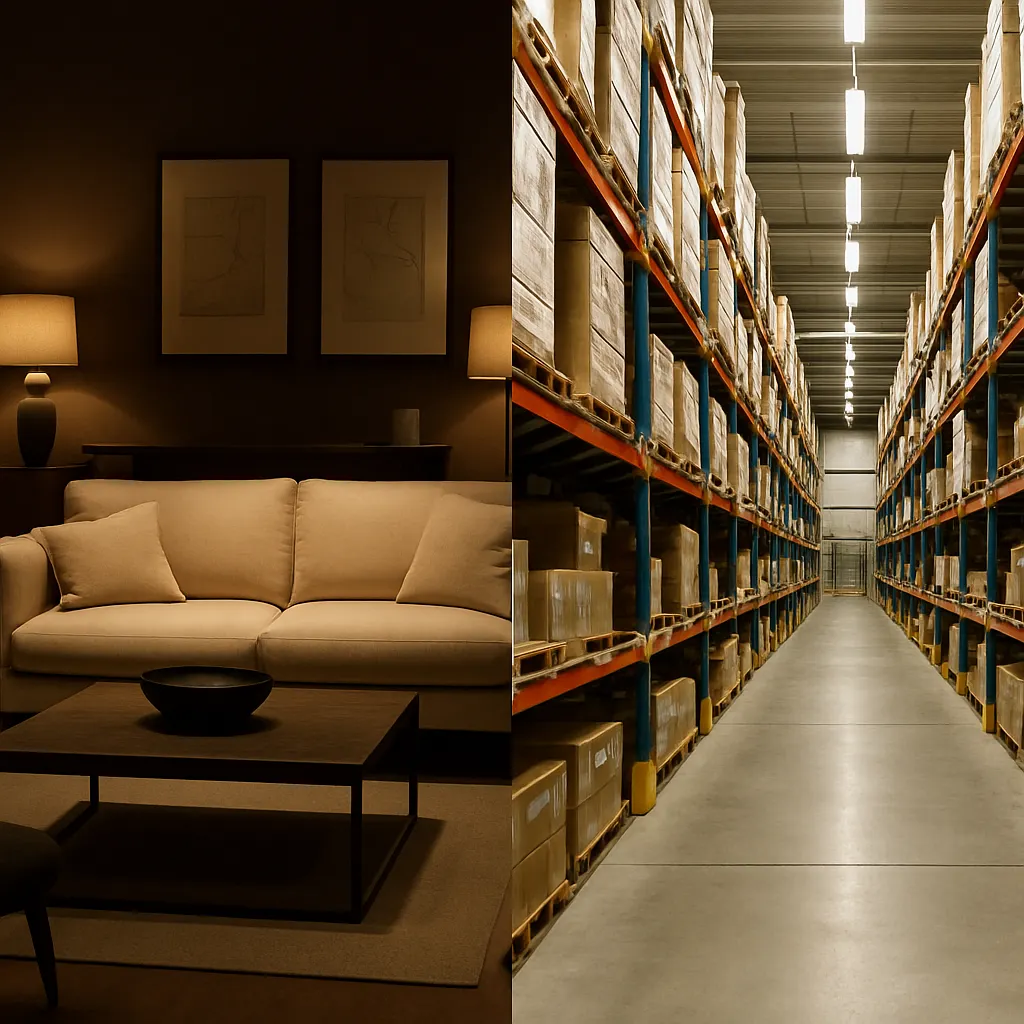
The answer usually lies in the markup—the amount a store adds to the manufacturing cost to ensure they make a profit. Industry averages suggest the typical retail vs wholesale furniture price difference stems from a 200% to 400% markup applied by standard retailers. When you pay MSRP (Manufacturer’s Suggested Retail Price), a large chunk of your money often covers the store’s rent, electricity, and sales commissions rather than the actual materials in the sofa.
Understanding the math behind these profit margins helps you shop smarter. By knowing why cheap couches exist, you can confidently spot the difference between a great deal and a poor-quality knockoff.
The ‘Costco vs. Gas Station’ Math: Why Buying in Bulk Slashes Prices
Buying a couch at wholesale is similar to buying a 24-pack of paper towels at a warehouse club instead of a single roll at a gas station. The product is identical, but the price tag changes drastically based on volume. When a large wholesaler places an order, they aren’t asking for three grey sectionals; they are demanding three thousand. This massive buying power drives down the “unit cost”—the specific amount of money it takes to make just one single couch.
Factories reward this bulk behavior because it makes their operation run smoother. Imagine you are baking cookies: it takes the same amount of effort to heat the oven and clean the bowl whether you make one cookie or five dozen. In the furniture world, setting up the assembly line creates a fixed cost. When a wholesaler orders huge quantities of bulk sofas, that setup cost gets spread out over thousands of items, creating “economies of scale” that drop the price for everyone involved.
The savings cascade down through three specific areas before the furniture even leaves the plant:
- Raw Materials: Buying velvet and lumber by the ton secures deep discounts that small boutique shops can’t get.
- Factory Efficiency: Workers stay faster and more accurate when building the same model all day rather than constantly switching tasks.
- Shipping Logic: Wholesalers pack shipping containers like Tetris blocks, ensuring they aren’t paying to ship empty air across the ocean.
However, manufacturing efficiency is only half the story. Once that couch leaves the factory, it usually passes through a chain of hands that each want a cut of the profit.
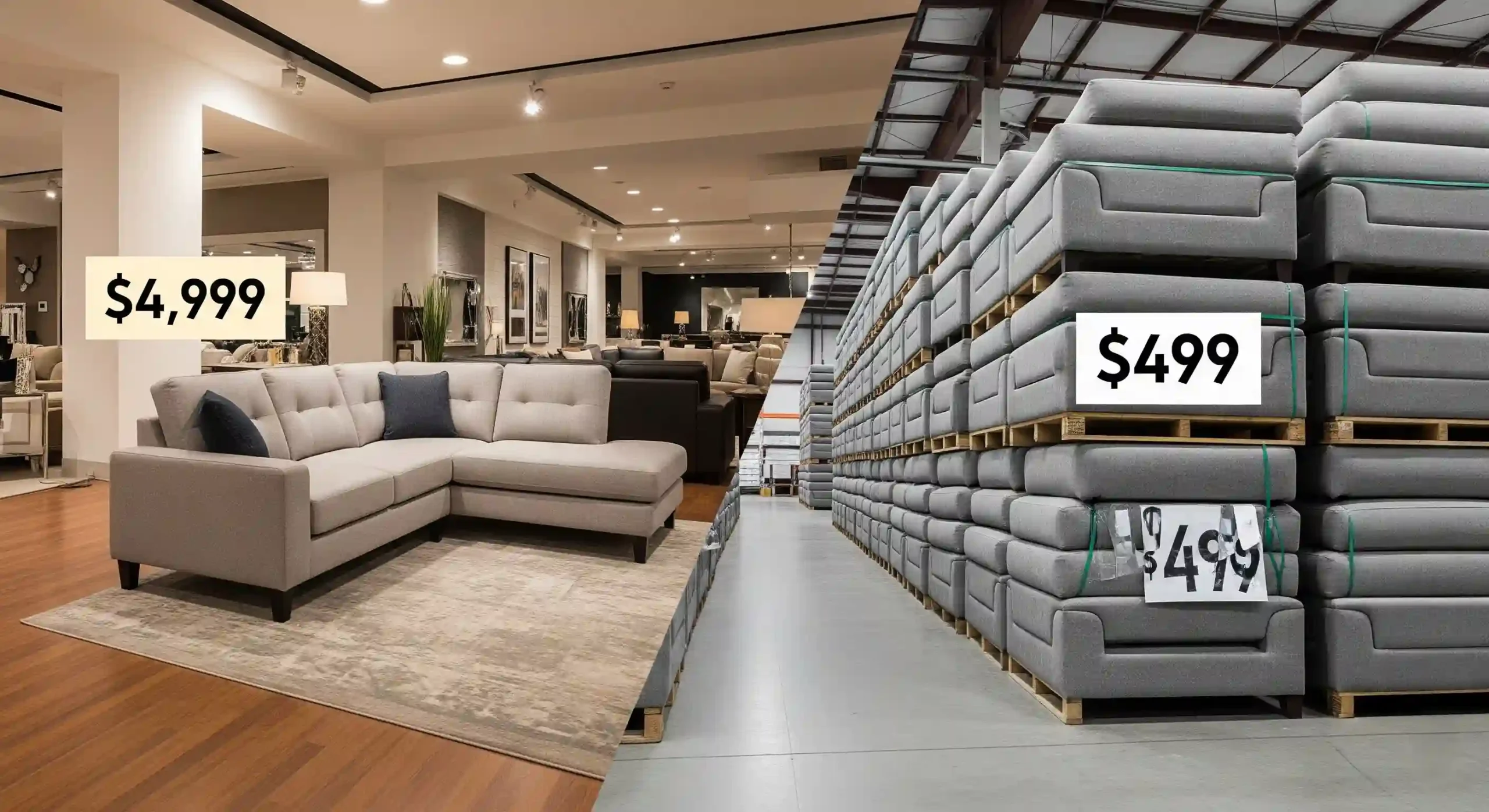
The Hidden ‘Tax’ of the Middleman: Who Else is Taking Your Money?
Every time a piece of furniture changes hands between the factory and your front door, its price tag grows. You might assume the bulk of your payment covers the wood, fabric, and craftsmanship, but in traditional retail, you are often paying a “tax” for the journey itself. This furniture supply chain cost breakdown reveals that a standard sofa is bought and sold multiple times before you ever see it, with each owner adding their own profit margin to the total without actually improving the product.
To understand where your money really goes, look at this typical price ladder for a living room set:
- Manufacturer: Builds the couch (Base Cost).
- Importer: Pays to get it across the ocean (Adds shipping and tariffs).
- Distributor: Stores it in a massive warehouse (Adds storage fees).
- Retail Brand: Buys it from the distributor to stock their inventory (Adds branding markup).
- Showroom Salesperson: Sells it to you (Adds commission).
This bloated process is exactly why the Direct-to-Consumer (DTC) model has exploded in popularity. By purchasing closer to the source, you bypass the importers and sofa suppliers who usually stand in the middle with their hands out. Leveraging these furniture manufacturer direct pricing advantages effectively deletes those extra layers of profit, leaving you with the same quality item for a fraction of the shelf price. However, even if you manage to skip the middlemen, there is still one massive cost that traditional retailers can’t hide: the price of the building itself.
Why Showroom Lights and Fancy Coffee Add 50% to Your Price Tag
When you walk into a beautifully decorated furniture boutique, you aren’t just looking at sofas; you are stepping into a carefully curated experience. The complementary espresso, the perfectly dim lighting, and the prime locati0n on Main Street all contribute to an atmosphere of luxury, but they also create a massive financial burden known as overhead. These operating costs don’t vanish into thin air; instead, they are quietly folded into the price of every armchair and ottoman on the floor, inflating the final sticker price significantly.
Think of a traditional retailer like a landlord who has to pay a mortgage on a premium property every single month. To cover the high rent for that spacious showroom, plus electricity bills and staff salaries, the store owner relies on high margins to cover the overhead expenses in traditional furniture stores. If a business needs $50,000 a month just to keep the doors open, they cannot afford to sell you a couch for $800, even if they bought it for $400.
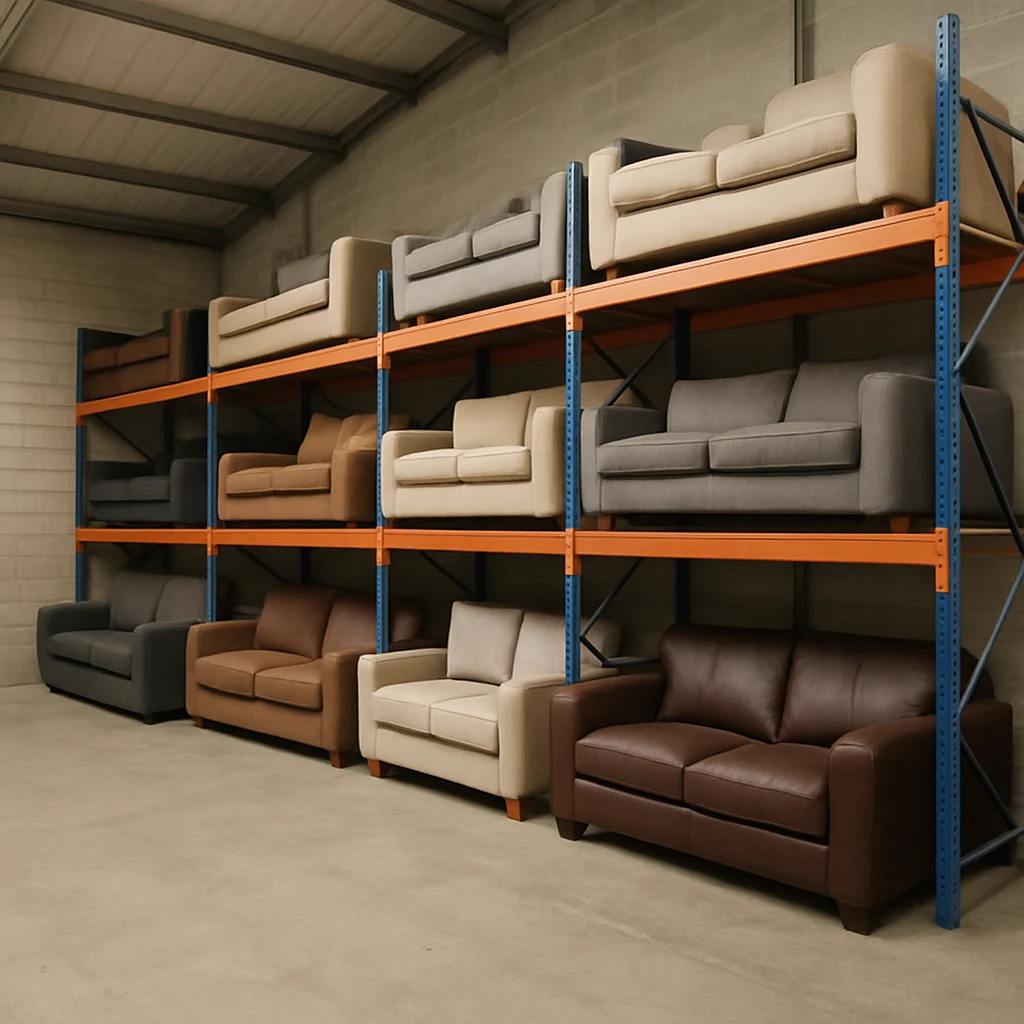
Wholesale outlets operate on a completely different philosophy, trading aesthetic appeal for raw efficiency. By selling inventory directly from a concrete warehouse located in an industrial park rather than a high-traffic shopping mall, these sellers eliminate the need for expensive decor and aggressive sales teams. This lack of overhead explains why retail furniture is so expensive by comparison; the wholesaler can sell you the exact same product for hundreds less because they aren’t charging you for the building it sits in.
Shifting your spending strategy away from “ambiance” to “item value” is the fastest way to stretch your budget, but a nagging question often remains for first-time wholesale buyers. Once you strip away the branding, the fancy showroom, and the hidden costs of retail furniture markups, is the product left behind actually durable? We must inspect the upholstery to see if saving on price means compromising on the frame, foam, and fabric.
Decoding Material Costs: Is ‘Cheap’ Wholesale Furniture Actually Low Quality?
It is natural to worry that a lower price tag automatically signals a shorter lifespan for your furniture, implying you will be back shopping for a replacement in two years. However, much of what you pay for at a boutique is the brand name on the box, not the wood and fabric inside it. To determine if a wholesale find is a hidden gem or a regret waiting to happen, you need to ignore the prestigious logo and inspect the raw specifications. Distinguishing between “brand value” and “material value” allows you to identify high quality wholesale couches without overpaying.
The lifespan of any sofa is primarily determined by its “bones” and the stuffing that covers them. Manufacturers often cut costs by using stapled particleboard and low-density fillers that flatten out like a pancake after a few months of movie nights. In contrast, a durable piece will list specific construction details that prove it can handle daily wear. Look for specific terms like “kiln-dried,” which means the wood has been baked to remove moisture so it won’t warp, and cushion foam that is dense enough to bounce back instantly when you stand up.
Surface materials are often where the most deceptive cost-cutting happens, especially when shopping for leather. A deal that seems too good to be true often involves “bonded leather,” which is essentially leather dust and scraps glued together with vinyl—it peels and cracks within a year. Genuine top-grain leather costs more to source, but it develops a patina and lasts for decades. The impact of material sourcing on couch pricing is significant; a $500 leather sofa is likely a trap, while a $1,200 wholesale option might be a genuine bargain compared to a $3,000 retail equivalent.
Before you commit to a purchase, verify the product description contains these three non-negotiables:
- Frame: Look for “Kiln-dried hardwood” rather than generic “wood” or “plywood.”
- Cushions: Ensure foam density is at least 1.8 lbs; anything lower will sag quickly.
- Upholstery: Choose “Top-grain” for wholesale leather couches and avoid “bonded” blends.
Once you confirm the materials are solid, the remaining price difference usually comes down to logistics rather than quality. Sometimes, the biggest discounts happen simply because a warehouse ran out of space and needs to clear the floor immediately.
The Overstock Secret: How Inventory Liquidation Drives Prices Even Lower
Imagine you are renting a storage unit for a friend’s belongings, but they stop paying you. Every month that passes costs you money out of your own pocket, so eventually, you would happily let those items go for free just to stop the bleeding. Wholesalers face this exact problem on a massive scale, known in the industry as “holding costs.” Every square foot of a warehouse has a price tag attached to it, and a giant sectional takes up valuable real estate that could be used for newer, faster-selling items. This financial pressure drives inventory liquidation and overstock furniture pricing, where merchants slash prices not because the product is flawed, but because the cost of keeping it has become higher than the profit they would make waiting for a full-price buyer.
Situations often arise where perfectly good inventory becomes a burden due to canceled commercial contracts or sudden shifts in design trends. For example, a luxury hotel chain might order 200 units of a specific leather sofa on sale for a lobby renovation, only to cancel the project at the last minute. The wholesaler is suddenly stuck with hundreds of identical, high-quality couches that need to move immediately. In these scenarios, the “dead stock”—industry speak for items that aren’t selling fast enough—becomes your opportunity to snag high-end furniture for pennies on the dollar simply because the seller needs their loading dock back.
Timing your purchase around these cycles can unlock the deepest discounts available on the market. Just as swimsuits go on clearance in September, furniture often sees massive price drops right before new collections arrive in early spring and late autumn. By understanding that wholesale couches for sale are often priced to beat the clock rather than to reflect their material quality, you can stop viewing low prices with suspicion and start viewing them as logistical necessities. However, distinguishing between a lucky liquidation find and a scam requires knowing exactly what red flags to look for before handing over your credit card.
How to Safely Buy Wholesale Without Getting Burned
Finding an incredible deal feels like winning the lottery, but it shouldn’t feel like gambling. The internet is full of horror stories about “luxury” items arriving as doll-sized replicas or never arriving at all. The key to avoiding low quality cheap furniture scams isn’t avoiding low prices entirely, but verifying the merchant behind them. Legitimate wholesalers operate with thin margins, not thin ethics, and they leave a digital trail you can follow.
Before you enter your payment information, run the seller through this four-point safety check:
- Google Maps the Address: If their listed “warehouse” looks like a residential garage or an empty lot on Street View, walk away immediately.
- Scan for “Lead Time” Complaints: Reviews mentioning six-month delays often indicate the seller is preselling stock they don’t actually own yet.
- Read the Return Fine Print: Couch wholesalers often charge “restocking fees” ranging from 15% to 30%, so you need to know the specific cost of changing your mind.
- Check the “FOB” Status: Ensure the price includes getting the item to your door, not just onto a truck at a factory.
Shipping terms are where hidden costs often hide. You might see the acronym “FOB” (Free On Board), which is industry shorthand for defining when the sofa stops being the seller’s problem and starts being yours. If a deal is listed as “FOB Origin,” you are technically responsible for the shipping costs and risks the moment the item leaves the warehouse dock. While rare for standard consumer sites, this can pop up in direct-factory deals, potentially surprising you with separate bills for import duties and shipping logistics for sofas that you assumed were covered.
Scrutinizing these details might feel tedious, but it is the difference between a savvy investment and a costly mistake. Once you have verified the seller and confirmed that the shipping terms are favorable, you are safe to secure that high-end look.
Your 3-Step Plan to Saving $1,500 on Your Next Living Room Update
You’ve graduated from a passive shopper to a logistics insider. You now realize that the hefty price tag in a boutique isn’t always for the velvet—it’s often for the showroom’s rent and the “middleman” fees. By skipping the spectacle, wholesale couches allow you to secure quality furniture without funding a retailer’s overhead.
Your Savvy Buyer’s Cheat Sheet:
- Set the Cap: Define your budget ceiling before browsing to avoid upselling yourself.
- Check the Inside: Look past the brand name; verify kiln-dried frames and high-density foam specs.
- Do the Math: Compare the specific black couch you want against similar retail models to confirm the price gap.
That extra $1,500 belongs in your pocket, not in a store owner’s ledger. The next time you spot cheap couches that seem too good to be true, you won’t hesitate. You will look past the glitter, check the specs, and buy with the confidence of someone who knows exactly what they are paying for.