20 years of factory experience——focusing on the production and sales of all types of furniture
High-Margin Modulars: A Sofa Wholesale Guide to 3 Styles Your Store Needs

Table of Contents
We’ve all been there: you move to a new apartment, excitedly unwrap your beloved L-shaped sofa, only to realize the “L” faces the wrong wall. Suddenly, your entire living room layout is dictated by a rigid piece of furniture that refuses to adapt. This common frustration explains why the traditional “one-size-fits-all” model is rapidly losing ground to a smarter, more flexible alternative.
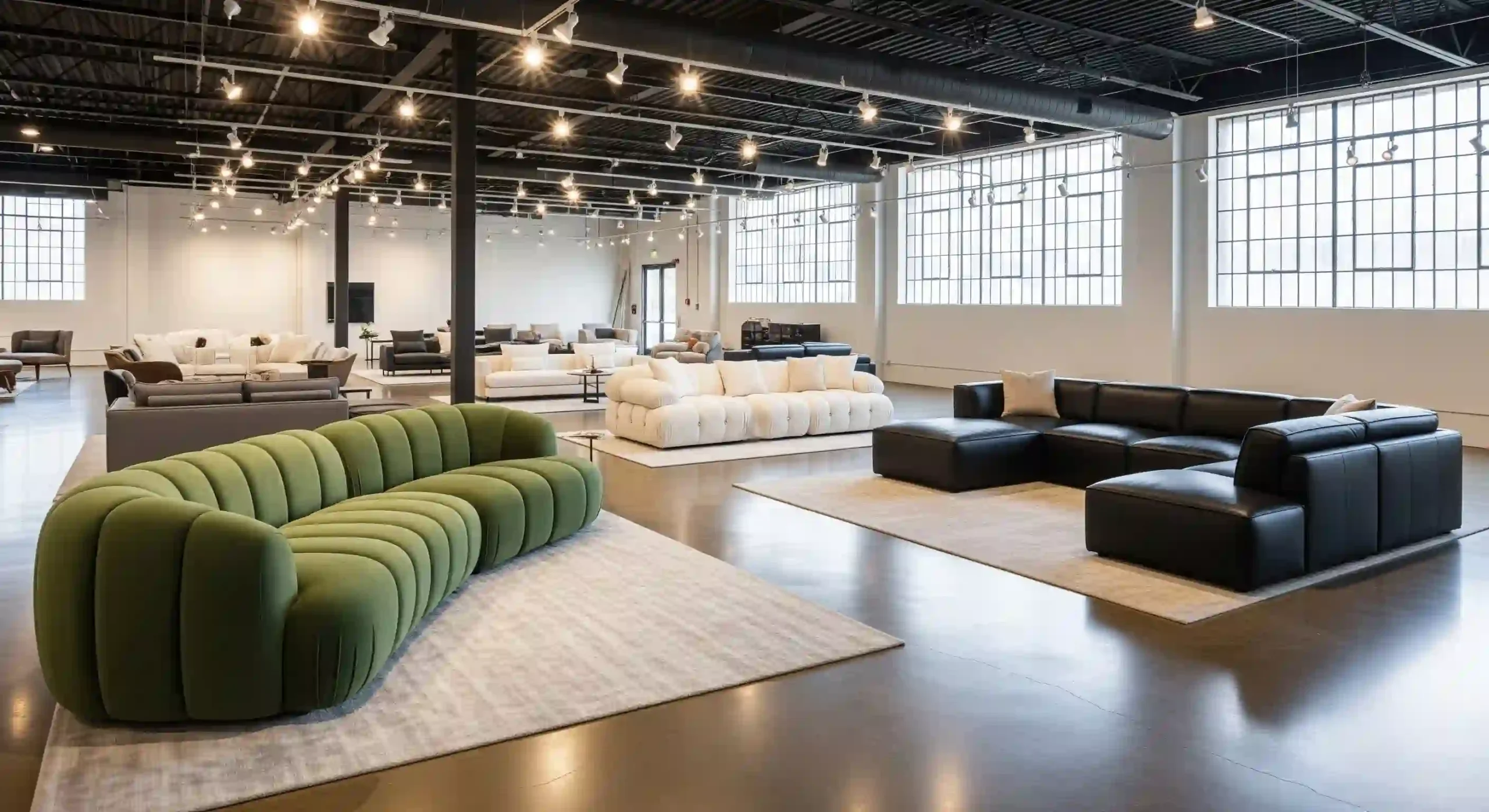
Enter the era of modular design—essentially, furniture that works like building blocks for adults. Think of it less like buying a static couch and more like acquiring a set of comfortable Legos. Whether you are hosting a movie night or need to clear space for a home gym, these systems allow you to break apart and reconfigure your seating at a moment’s notice. It is furniture that grows and shrinks with your life, ensuring you never have to leave a favorite piece behind just because you moved to a different home.
For retailers and showroom managers, this shift offers a significant boost to “Floor ROI” (Return on Investment). Instead of dedicating precious square footage to three different fixed sofas, a single modular collection can be styled in multiple ways to demonstrate variety. Industry observation confirms that modern homeowners are switching to modular systems for three primary reasons:
- Logistics: Individual pieces easily fit through narrow elevators and doorways.
- Longevity: The ability to purchase “add-on” sections later as the family or budget grows.
- Customization: Freedom to create a multi-directional “sofa island” rather than just a wall-hugger.
So, which shapes are actually defining this trend in 2024? We are moving past generic sectionals into an era of distinct personality. From cloud-like, low-profile seats to structured geometric blocks, here is a guide to the three specific modular styles that balance high-design appeal with everyday utility.
Style 1: The ‘Cloud’ Low-Profile—Why ‘Marshmallow’ Comfort is a Gen Z Must-Have
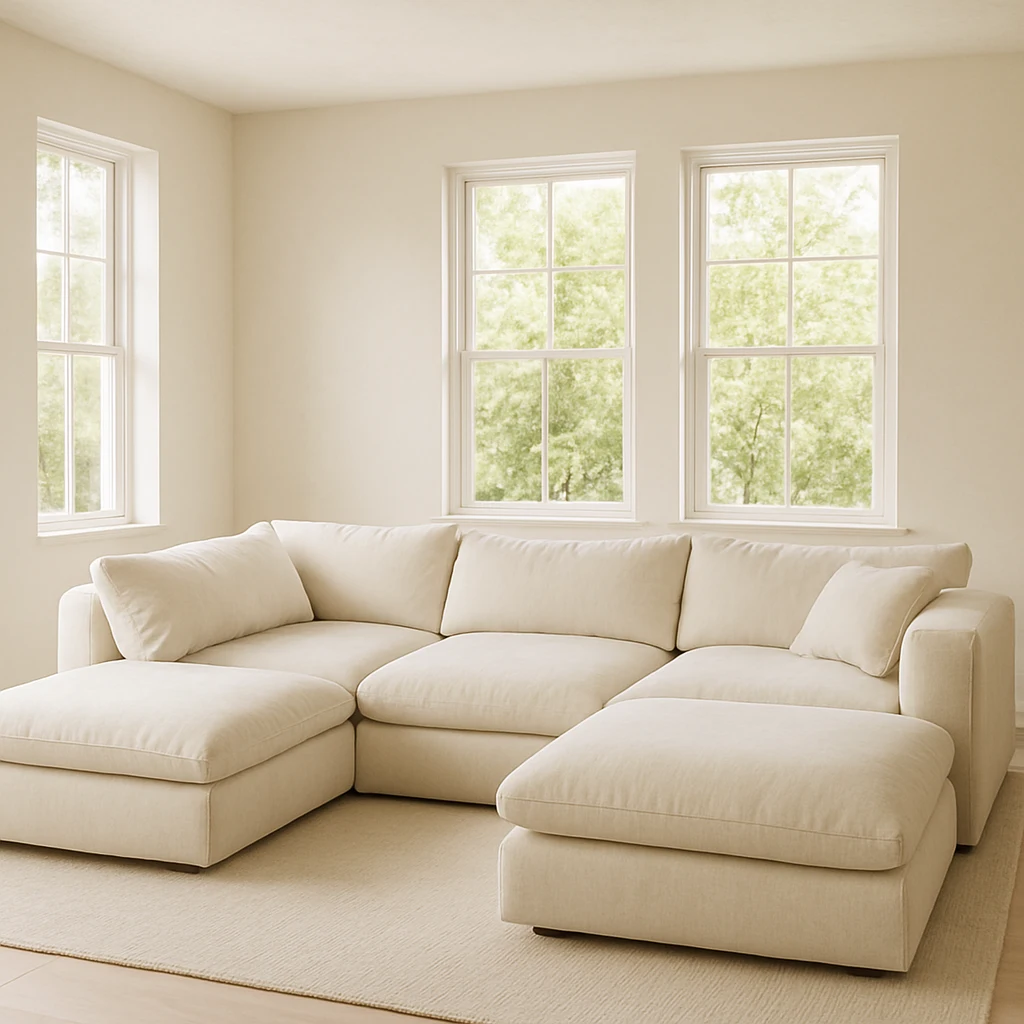
If you walk into any major design showroom or scroll through social media right now, you’ll notice that furniture legs are rapidly disappearing. The traditional sofa perched on wooden stilts is being replaced by what the industry affectionately calls the “Marshmallow” silhouette. These low-profile, floor-hugging pieces prioritize visual weight and softness over rigid structure, looking less like formal seating and more like a gathering of cozy, overstuffed pillows invited to a party. This shift represents the most significant trend in the 2024 home exhibitions: a move away from “office-sharp” lines toward “home-soft” curves.
Beyond just looking inviting, there is a practical magic to this design choice, especially for compact urban living. By eliminating visible legs and dropping the seating height, these sofas trick the eye into seeing more vertical space, making standard ceilings feel grander and airier. It is a subtle visual hack that turns a cramped living room into a spacious lounge, proving that a multifunctional sectional for small apartments doesn’t have to look small to fit well. The lower center of gravity grounds the room, creating a relaxed atmosphere that encourages lounging rather than perching.
Achieving that signature “cloud” sensation requires specific internal engineering that differentiates these pieces from standard couches. Manufacturers swap out stiff, high-density foam cores for layers of down feathers or shredded memory foam blends, creating that luxurious “plop” when you sit down. Because the form is so soft, the upholstery needs to be equally forgiving; this is why you almost exclusively see these wrapped in tactile, textured fabrics like heavy linen or knobby bouclé that hide wrinkles and enhance the cozy vibe.
Styling these ground-level giants does require a bit of strategy to keep the room from looking undefined. Because the sofa connects directly to the floor, rug matching tips become critical; pairing these units with a thick, high-pile rug creates a deliberate “island” of comfort that anchors the floating pieces. For retailers and homeowners alike, the goal is the contrast—letting the soft, nebulous shape of the sofa stand out against a clearly defined floor texture, ensuring the setup looks curated rather than messy.
While the cloud look dominates the desire for pure comfort, it isn’t the only shape changing how we live. For those who crave order over organic softness, the industry has pivoted in the exact opposite direction: a structured, grid-based system that treats furniture like precision architecture.
Style 2: The ‘Tofu’ Geometric—How Precision Grids Maximize Small Apartment Margins
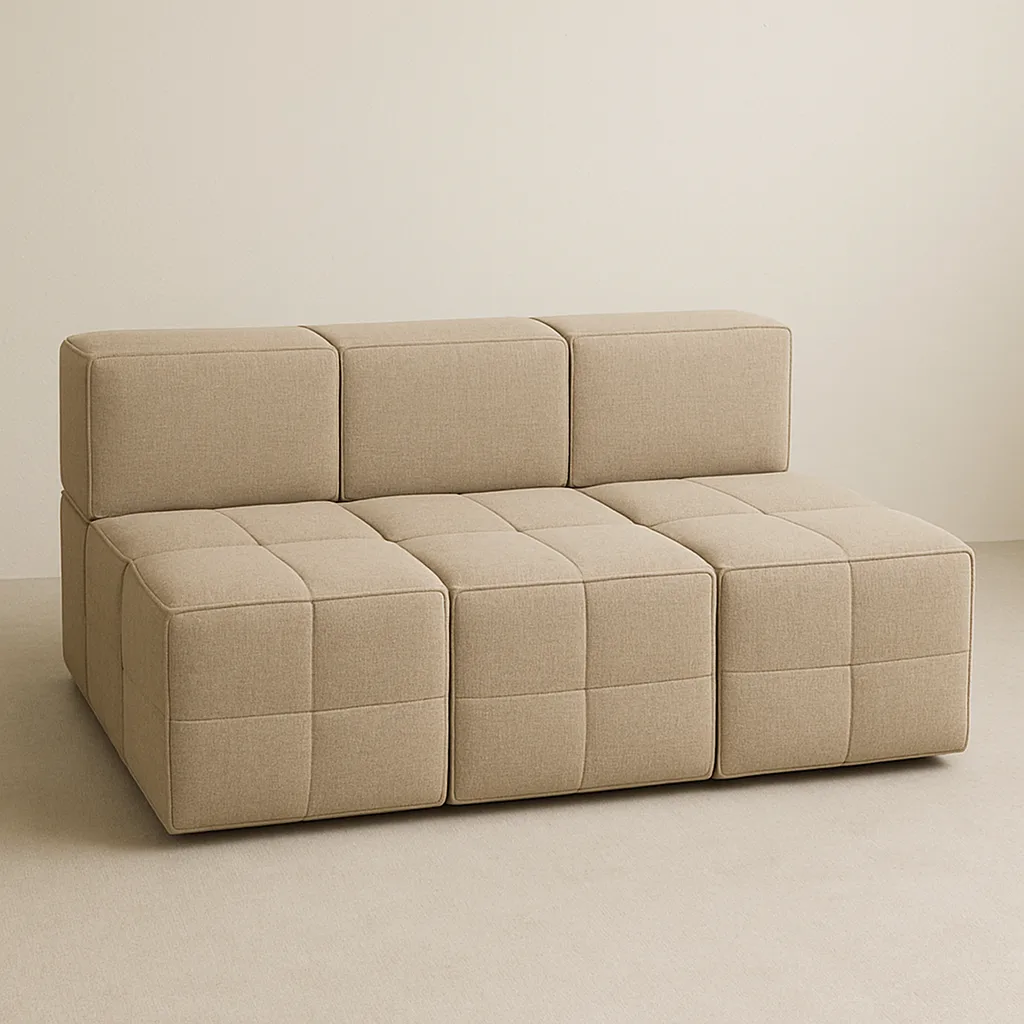
While the “Cloud” style asks you to sink in, the “Tofu” or geometric aesthetic asks you to build up. Think of this approach less like a beanbag and more like adult Legos. These systems rely on perfectly square modules—often referred to in design circles as “Tofu blocks” due to their clean, distinct cubic shapes—that click together to form a rigid, architectural landscape. It is the ultimate solution for homeowners who crave visual order and clean lines over slouchy comfort.
The real genius of this grid-based design lies in its spatial efficiency. In a traditional L-shaped sofa, the corner seat is often a “dead zone” of wasted space or awkward legroom. With geometric modularity, every inch is calculated. The strict ninety-degree angles mean these pieces fit flush against walls or slot perfectly into tight apartment corners, maximizing floor space in a way rounded sofas simply cannot. It transforms the sofa from a passive object into a customizable floor plan, allowing you to build exactly as much seating as your room allows.
Achieving this crisp, architectural look requires a completely different approach to internal engineering. You won’t find down feathers here; instead, manufacturers use layers of high-resiliency, firm foam. This higher density is essential because the sofa must hold its sharp edges and vertical lines even after years of sitting. For rental properties or high-traffic family rooms, this firmness is a major asset—it prevents the furniture from looking “lived in” or sloppy, maintaining that showroom-fresh silhouette far longer than softer alternatives.
Visually, the goal is the “Invisible Seam” effect. When these firm blocks are pushed together, the tight upholstery—often utilizing smooth Italian minimalist modular fabric choices or tightly woven wools—makes the connections nearly disappear, creating one unified, monolithic form. This allows you to break the set apart for a party and reconnect it later without it looking like a jumble of mismatched parts.
To help you decide between these two dominant comfort philosophies, consider this trade-off:
- The Cloud: Low support, high “sink-in” factor, forgiving aesthetics. Best for: Movie marathons, naps, and casual lounging.
- The Tofu: High support, firm “sit-on” feel, precise aesthetics. Best for: Socializing, entertaining, and small spaces that need structure.
However, if squares feel too rigid for your taste but clouds feel too messy, there is a third option emerging that blends the best of both worlds. The final trend moves away from straight lines entirely, embracing nature’s favorite shape: the curve.
Style 3: The ‘Pebble’ Organic—The Biomorphic Shift That Commands Luxury Prices
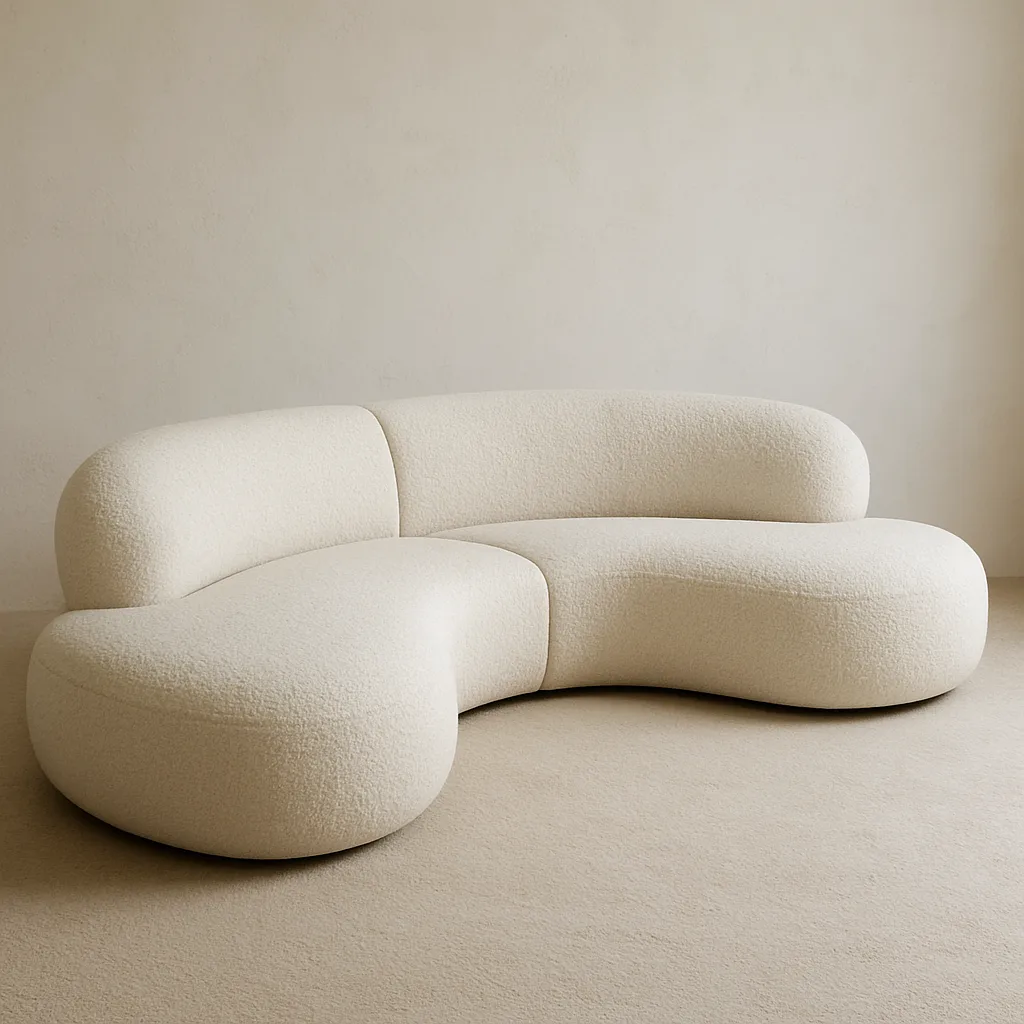
Nature rarely moves in straight lines, and the most luxurious trend in modular furniture right now reflects that truth. While geometric grids offer precision, “Pebble” or organic styling introduces what designers call biomorphic design—shapes inspired by living organisms and natural elements like river stones, kidney beans, or drifting clouds. This aesthetic softens the harsh angles of modern architecture, turning the living room into a landscape rather than a rigid grid. It’s a favorite in high-end design because it creates a sense of flow that boxy furniture simply cannot match.
Functionally, this shift towards curvature changes how people interact in a room. A straight sofa points everyone at a wall (usually a TV), but a curved sectional naturally angles people toward each other. It creates a “campfire effect,” gently encouraging conversation and eye contact without forcing anyone to twist their neck. For anyone looking to create a sophisticated hosting space rather than just a media room, the organic curve creates a subtle, welcoming psychology that feels expensive and intentional.
For open-concept homes where the kitchen, dining, and living areas blend together, these rounded forms offer a unique architectural advantage: the 360-degree island. Unlike traditional sofas that have a clear “front” and an ugly “back,” many pebble-style modules are designed to look beautiful from every angle. Some units even feature “multidirectional seating”—low, weighted backrests that allow you to sit facing the living room conversation or perch on the other side to chat with someone in the kitchen. This versatility creates a visual bridge between zones rather than a blockade.
Upholstery plays a critical role in pulling off this look successfully. Because it is difficult to stretch flat fabric over a round sphere without creating unsightly wrinkles, you will rarely see these pieces in flat cotton or stiff leather. Instead, the industry standard is textured bouclé or heavy knits. These nubby, looped fabrics have enough natural stretch to hug the curves perfectly, and their stone-like texture enhances the “river rock” illusion. When choosing colors, sticking to earthy neutrals—creams, moss greens, or stone grays—reinforces the natural inspiration and keeps the piece from looking like a cartoon prop.
While these organic shapes offer fluid beauty, they present a unique mechanical challenge: round edges don’t lock together as naturally as flat squares. Without the friction of flush flat sides, these “pebbles” are prone to drifting apart on hardwood floors, turning your cohesive seating arrangement into a scattered mess. This brings us to the unsung hero of modular longevity: the hardware hidden underneath.
Why ‘Invisible Hands’ Matter: Comparing Connection Systems for Different Floors
Nothing kills the luxury vibe faster than sitting down on a sectional and having it slide three inches away from the rest of the group. While the beauty of modular design lies in its flexibility, the reality of living with it requires stability. Without proper connection systems—what we call the “invisible hands” holding the layout together—your carefully curated conversation pit can quickly become a scattered archipelago of lonely chairs. This is especially true for modern homes with sleek hardwood or polished concrete floors, where friction is naturally minimal.
Most standard geometric sets rely on mechanical hardware, specifically “alligator clips” or ratcheting connectors hidden on the underside of the frame. These metal brackets feature teeth that snap together to lock two modules into a solid unit. They are the gold standard for wholesale sofas intended for semi-permanent layouts because they create a bond strong enough to withstand kids jumping or heavy daily use. However, they usually require you to flip the furniture over to engage or disengage them, making spur-of-the-moment rearrangements a sweat-inducing, two-person job.
For those who prioritize spontaneity over rigid stability, manufacturers are increasingly turning to gravity and friction. High-quality “floating” modules often use heavy weighted bases combined with aggressive non-slip rubber feet. This approach relies on the sheer mass of the unit to keep it planted. It is a key feature mentioned in any comprehensive showroom furniture stocking strategy guide because it allows sales staff to demonstrate three different layouts in five minutes without reaching for a tool belt.
Choosing between hard locks and soft friction depends entirely on how often you plan to “remix” your room and the internal modular sofa frame structure durability analysis.
- Mechanical Clips: Best for high-traffic family rooms; prevents annoying gaps; requires effort to move.
- Weighted/Rubber Bases: Best for dynamic spaces; zero installation required; potential for slight drift on very slick floors.
Once you have secured the structure, the next challenge is ensuring the surface survives the traffic. If your sofa stays put, people will sit on it—a lot.
Fabric Selection for High-Traffic Showrooms: Tech-Cloth vs. Bouclé
Choosing the right cover material is just as critical as the frame beneath it, especially when you are trying to convince a customer—or your spouse—that a light-colored sectional is a safe bet for a house with a Golden Retriever. For decades, the leather sofa wholesale market was polarized between expensive genuine hides and cheap, peeling bonded alternatives, but recent textile advancements have introduced a “third way” that bridges the gap. Tech-Cloth, often commercially labeled as Leathaire, has rapidly become the default choice for buyers who want the sophisticated look of leather without the “stickiness” in summer or the complex maintenance routines.
This innovative material acts like a microscopic magic trick: it is a fabric weave processed to mimic the natural grain and sheen of animal hide while retaining the breathability of cotton. When analyzing the pros and cons of eco-tech cloth modular sofas, the headline advantage is durability against scratches. Unlike traditional leather that marks permanently under a cat’s claw, Tech-Cloth is woven tightly enough to resist punctures, making it nearly indestructible for active families. However, it is important to note that because it is technically a fabric, it handles liquid spills differently than sealed vinyl, requiring a quick blot rather than allowing puddles to sit indefinitely.
On the opposite end of the sensory spectrum lies Bouclé, the textured darling of the design world that resembles a field of cozy, looped wool. While sofa wholesale catalogs often list this option at a 20% premium, the extra cost is justified by its visual weight; the nubby, uneven texture softens the sharp geometric corners of modern modular blocks, making a room feel instantly warmer and more expensive. The trade-off for this high-fashion aesthetic is maintenance, as those beautiful loops can trap crumbs more easily than smooth surfaces, necessitating a handheld vacuum rather than a simple wet wipe.
Ultimately, the decision comes down to your lifestyle reality: do you need the “wipe-and-go” resilience of Tech-Cloth for a high-traffic family room, or are you curating a sanctuary that demands the tactile luxury of Bouclé? Once you have settled on the skin of the sofa, the fun really begins with how you arrange the body to fit your specific floor plan.
The ‘Lego’ Layout Strategy: Help Customers See 3 Rooms in 1 Sofa
Think of your living room as a dynamic playing field rather than a static museum exhibit. Traditional sectional sofas often dictate exactly how a room must be used—usually pointing everyone rigidly toward the television—but true modular systems function like adult building blocks. This flexibility is the secret weapon for solving awkward floor plans; instead of being stuck with a “left-facing chaise” that blocks a doorway after a move, you simply detach the end piece and float it as a central island.
Open kitchens and combined dining areas often suffer from visual clutter, which is where the strategic use of backless modules becomes essential. By placing an ottoman or a bench-style module in the middle of a layout, you create a “seating bridge” that allows people to sit facing the kitchen for snacks or turn around to join the living room conversation. This technique maintains the “line-of-sight,” ensuring the space feels airy and connected rather than divided by a high furniture wall—a crucial tactic for making compact urban homes feel twice their size.
To truly maximize value, try visualizing these three distinct transformations achievable with a standard 4-piece set:
- The Nap Station: Push all ottomans and deep-seat modules together to form a massive, bed-like “pit” perfect for movie marathons.
- The Party Pod: Split the L-shape into two separate, facing sofas to encourage eye contact and conversation rather than screen-gazing.
- The Office Divider: Use a high-backed corner piece to physically separate a work-from-home desk from the rest of the leisure space, creating a psychological boundary for “focus time.”
Finally, don’t ignore the power of the “wedge” or curved corner to eliminate dead zones. While 90-degree corners are standard, curved modules allow a sofa to snake through a room organically, softening sharp architectural angles. For retailers figuring out how to choose sofa displays based on showroom space, demonstrating this adaptability is more persuasive than any discount. Providing a simple modular sofa free combination layout diagram empowers buyers to see that they aren’t just buying furniture; they are future-proofing their home against whatever life throws at them next.
3 Ways to Display One Modular Set to Triple Your Floor ROI
Floor space represents the single highest operational cost for physical retail, yet many showrooms unintentionally waste it by treating furniture as static sculptures. Rather than cluttering the aisles with five different fixed-frame sectionals, the smartest showroom furniture stocking strategy guide suggests investing in high-quality modular systems that can be rotated weekly. By showcasing the same four-piece “tofu block” set as a traditional corner unit on Monday, a conversation pit on Wednesday, and separated lounge chairs on the weekend, you demonstrate versatility that justifies the price tag while keeping the inventory fresh for repeat window shoppers.
The modular approach also unlocks the lucrative “add-on” sales model that creates long-term customer relationships. Traditional purchasing habits are usually binary—you buy a sofa once every seven years—but modularity turns furniture into a collectible ecosystem. Retailers can market a core three-piece setup for smaller apartments today, knowing that the same customer will likely return in two years to purchase matching armless chairs or ottomans when they upgrade to a larger home. This transforms a one-time transaction into a lifecycle of purchases, allowing furniture warehouse wholesale buyers to stock “expansion packs” rather than just isolated units.
Creating “Sofa Islands” by separating modules also solves the density problem that creates visual fatigue in smaller shops. When a dense L-shape is broken into smaller clusters, it naturally creates gaps that demand to be filled with high-margin accessories like nesting tables, statement rugs, or floor lamps. This “gap styling” forces the eye to travel through the room, making a compact display feel significantly larger while naturally cross-selling decor items that would otherwise look cluttered next to a solid wall of fabric.
Ultimately, the goal is to shift from selling a static product to selling a solution for the customer’s changing life. Whether sourcing from a local artisan or a high-volume sofa wholesale partner, prioritizing inventory that can serve three distinct functions—lounging, hosting, and dividing—triples the functional value of your floor space. This efficiency ensures that every square foot is working hard to convert browsing into buying, proving that flexibility is the ultimate driver of return on investment.
Modular vs. Traditional L-Shapes: The Long-Term Value Pitch
Accidents happen, but they shouldn’t cost you an entire living room set. A spilled glass of red wine or a scratching post incident usually spells doom for a traditional connected frame, forcing you to replace the whole unit. In the modular sofa vs. traditional L-shape comparison, independent modules win on longevity. Because each seat functions as a separate “block,” you can simply repair or replace the single damaged piece rather than discarding the furniture. This transforms what would be a catastrophic expense into a minor maintenance cost, extending the product’s life years beyond industry standards.
Logistics create the second major advantage, specifically regarding the headache of delivery and moving day. We have all watched movers struggle to pivot a massive 9-foot rigid frame around a tight stairwell corner. Modular systems solve this by breaking down into manageable boxes that fit into standard elevators and through narrow doorways. Whether you are maneuvering a sleek black sectional sofa into a basement media room or a velvet green sectional sofa into a third-floor walk-up, the ability to carry the sofa piece-by-piece eliminates the need for expensive hoists or window removals.
Finally, flexibility future-proofs your investment against changing trends. While a fixed sofa dictates your room’s flow forever, modular connectors allow you to split a large sectional into separate lounge chairs for a party or reassemble them for a movie night.
- Lifespan: Traditional (Ends with one tear) vs. Modular (Renewable via part replacement).
- Ease of Moving: Traditional (Requires a crew) vs. Modular (Box-friendly/One person).
- Customization Score: Traditional (Static) vs. Modular (Limitless configurations).
With the functional benefits established, the final piece of the puzzle is selecting the right aesthetics for your inventory.
Your High-Margin Inventory Checklist: Choosing the Right Colors and Pallets
Transitioning from observing these trends to placing orders is where the real transformation happens. You are no longer just looking at furniture; you are curating a lifestyle of flexibility. Whether you lean toward the sink-in luxury of the Cloud style, the structured versatility of the Tofu block designs, or the nature-inspired flow of Pebble shapes, the goal remains the same: solving the modern dilemma of rigid living spaces with adaptable solutions.
To navigate the 2024 Popular Living Room Sofa Trend Report without overcommitting, apply a strategic balance to your inventory or design board. Successful sofa wholesale purchasing isn’t about guessing the future; it’s about hedging your bets with texture and tone.
The ‘Safe-Bet’ Stocking Checklist:
- The 60-30-10 Color Rule: Allocate 60% of stock to creamy neutrals (versatile bases), 30% to practical earth tones like taupe or warm grey, and strictly 10% to bold accents like moss green or terracotta to draw the eye.
- Texture Over Color: Prioritize heavy textures like Bouclé or heavy-gauge chenille. They add visual interest to neutral colors and offer practical durability for daily use.
- Lead Time Buffer: High-demand items like the Top 3 Modular Sofas of the Year often require complex upholstery work. Factor in a 12-16 week lead time to ensure your floor is ready for peak seasons.
When explaining these pieces to a customer or partner, shift the conversation from “dimensions” to “future-proofing.” Remind them they aren’t buying a static object, but a system that survives moves, grows with families, and adapts to hosting needs. By stocking these adaptable designs, you offer more than just a place to sit—you offer the freedom to redesign a room on a whim, turning a fixed floor plan into a canvas of endless possibilities.