20 years of factory experience——focusing on the production and sales of all types of furniture

Wholesale Outdoor Wood Furniture: How to Maximize ROI on Patio Inventory

Table of Contents
Every summer, retailers watch cheap plastic chairs fly off the shelf for pennies in profit, while a single teak dining set sits nearby, promising a margin that could cover a week’s rent. Wholesale Outdoor Wood Furniture represents the gold standard for inventory because customers inherently value the material’s warmth and longevity over synthetic alternatives. However, capturing that value isn’t as simple as just buying low and selling high; without a specific strategy, that beautiful inventory becomes a liability rather than a high-yield asset.
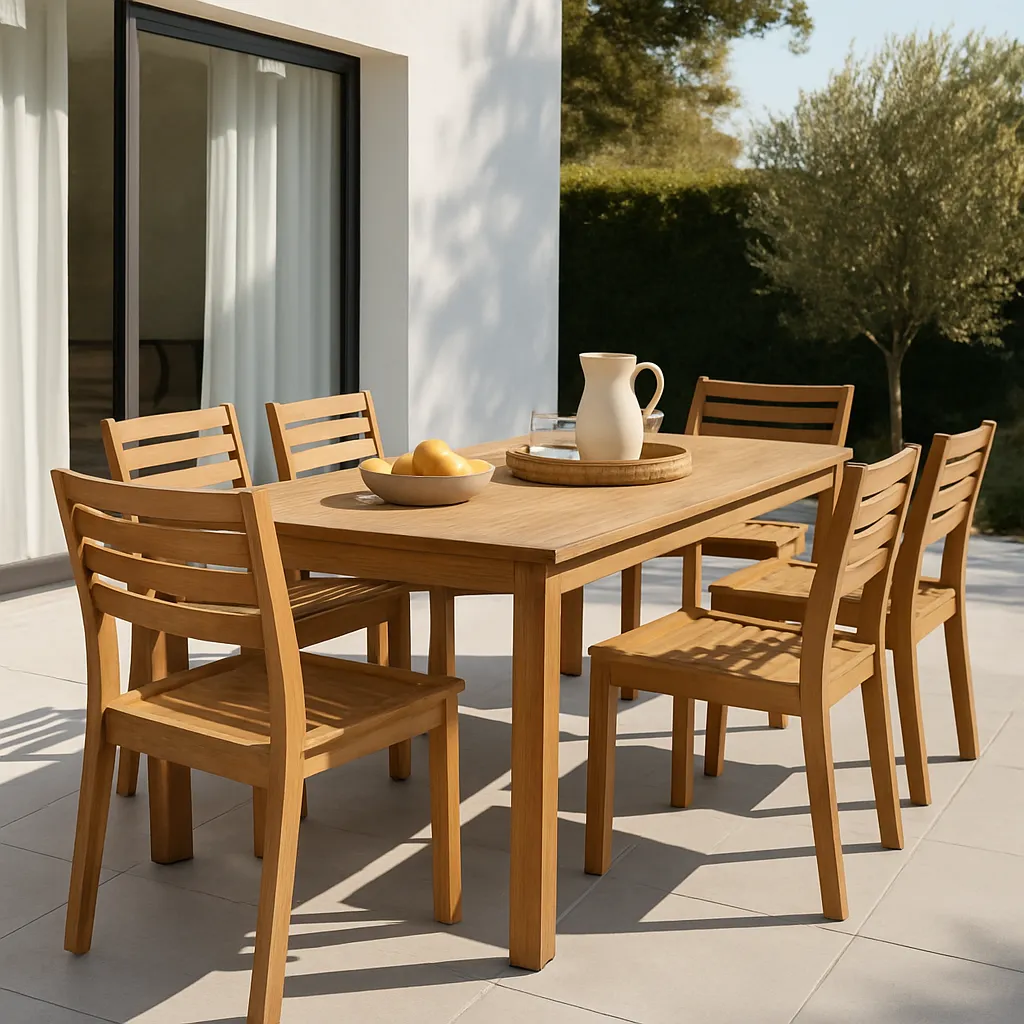
Unlike boxed electronics or molded plastic goods, timber is a living material that reacts to its environment long after it leaves the forest. Logistics experts estimate that shipping inefficiencies and storage errors can consume up to 30% of potential profit margins on bulky items before they even reach the showroom floor. A sudden humidity spike in your warehouse or a shipment that arrives two weeks late for the spring rush can quickly turn premium stock into discounted clearance items, threatening the ROI you projected at the time of purchase.
Despite these logistical hurdles, the payoff for managing these risks is substantial. Market trends consistently show that homeowners view patio wood furniture as a long-term investment in their property, allowing retailers to command significantly higher price points compared to metal or wicker. The secret lies in treating your wood inventory not just as a durable good, but as a sensitive asset that requires specific care and timing to maintain its premium status.
Navigating this market requires moving beyond basic markup math. By following a proven approach—selecting the right species, optimizing storage, timing your buy, and communicating value—you can effectively protect your investment. This four-step framework helps you select high-margin patio furniture styles and build a profitable program that minimizes risk while maximizing your return on every square foot of floor space.
Grade A Teak vs. Acacia: Matching Wood Species to Your Customer’s Budget
Selecting inventory for your showroom often feels like a balancing act between aesthetic appeal and the retail price tag. If you stock only premium items, you risk alienating budget-conscious shoppers; go too cheap, and you face a wave of returns when the furniture degrades after one rainy season. Specific properties of wholesale timber allow you to align your product mix with your target demographic’s expectations.
Teak remains the undisputed gold standard for commercial patio use because it is naturally saturated with protective oils that repel water and insects. However, simply seeing “Teak” on a wholesale manifest isn’t enough to guarantee quality. You must distinguish between “Grade A” and lower tiers. Grade A teak comes from the heartwood—the dense, oil-rich center of a mature tree that offers maximum durability. In contrast, “Grade C” teak often consists of sapwood, the living outer layers of the tree. While sapwood is cheaper, it lacks those critical natural oils and is far more prone to rotting and insect damage. Ensuring you are paying for heartwood protects your margins from future warranty claims.
For customers who love the look of wood but cannot justify the premium price of Grade A teak, alternative hardwoods like Acacia and Eucalyptus offer excellent ROI. Acacia is abundant and grows quickly, making it a sustainable, cost-effective choice for entry-level collections. It is incredibly hard and durable, though it lacks the high oil content of teak, meaning it requires more frequent sealing to prevent drying out. Eucalyptus sits firmly in the middle, offering a smoother finish and better natural weather resistance than Acacia, provided it is high-density timber.
To tier your pricing strategy effectively, consider this “Good, Better, Best” framework:
- Acacia (Good): The accessible entry point.
- Lifespan: 5–10 years (with care).
- Best For: Budget-conscious homeowners or covered patios.
- Maintenance: Requires annual sealing to prevent cracking.
- Eucalyptus (Better): The mid-range value winner.
- Lifespan: 10–15 years.
- Best For: Retailers needing a balance of durability and competitive pricing.
- Maintenance: Moderate; benefits from oiling once a season.
- Grade A Teak (Best): The luxury investment.
- Lifespan: 20+ years (often decades).
- Best For: High-end resorts, commercial spaces, or “buy it for life” consumers.
- Maintenance: Very low; naturally weathers to a silvery gray without compromising structure.
Ultimately, the species you choose dictates the story you tell on the sales floor. You can justify the higher price tag of a teak bench by explaining the self-preserving properties of its heartwood, just as you can sell an Acacia dining set as a high-value, eco-friendly starter piece. However, even the most expensive wood species will fail if the manufacturing process is rushed. The next critical factor in protecting your investment is how the wood was dried and assembled.
Avoiding the ‘Warp’: Why Moisture Content and Joinery Determine Your Resale Value
Even the highest-grade teak will twist into unsellable scrap if it hasn’t been properly seasoned before manufacturing. Because timber is a hygroscopic material—meaning it absorbs and releases water like a rigid sponge—it constantly tries to match the humidity of its environment. To prevent your inventory from warping the moment it hits a dry warehouse or a humid patio, manufacturers must kiln-dry the lumber to a specific Moisture Content (MC). For commercial-grade outdoor furniture, you should verify with your supplier that the wood has been kiln-dried to between 8% and 12% MC. This precise range ensures the cellular structure is stable enough to hold its shape during transit and display.
Skipping this verification is one of the most expensive mistakes a buyer can make. If a factory rushes production and builds a table with “wet” wood (15% MC or higher), that moisture will eventually escape once the product reaches a drier climate. As the water leaves, the wood shrinks, leading to catastrophic splitting, checking (small cracks), or joints popping apart before the customer even gets the item home. When you see bargain-basement wholesale prices, it is often because the manufacturer saved money by shortening the kiln time, passing the risk of product failure directly to your profit margins.
Once you are confident in the timber’s stability, your inspection should shift to how the pieces are held together. While staples and screws are cheap and fast for factory assembly, they rarely survive the expansion and contraction cycles of outdoor seasons. High-quality mortise and tenon joinery remains the industry benchmark for durability. In this technique, a projecting tongue (tenon) on one piece of wood fits tightly into a corresponding hole (mortise) on another, creating a mechanical bond that distributes stress across the wood rather than focusing it on a single metal fastener. This “wood-on-wood” connection expands and contracts together, preventing the wobble that eventually plagues screw-assembled furniture.
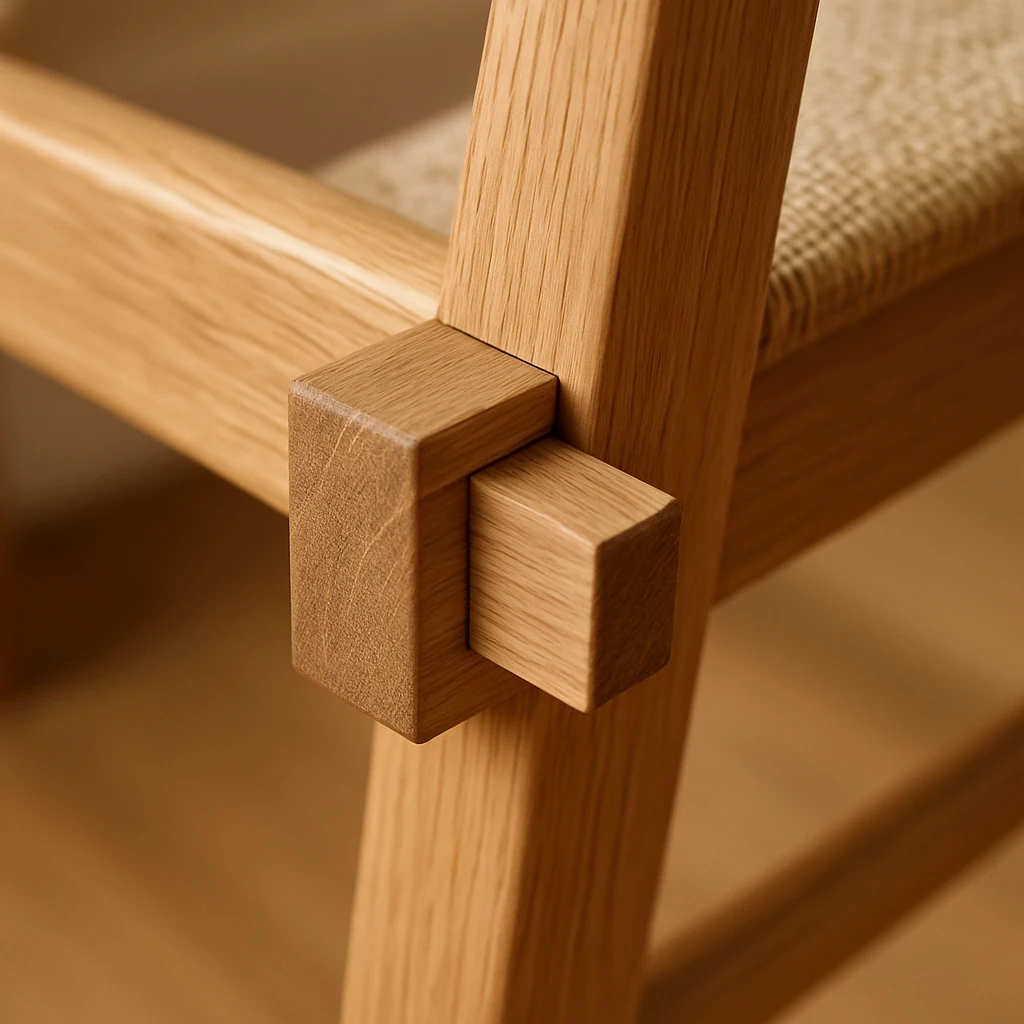
Verifying these construction details requires asking specific questions during your negotiation phase, not just reading the brochure. Requesting a “cut sheet” or technical specification document that confirms kiln-drying protocols and joinery methods helps you filter out low-end suppliers who rely on cosmetic finishes to hide structural shortcuts. Once you have identified a manufacturer who meets these quality standards, the challenge shifts from product quality to product availability. Getting these bulky, well-constructed goods from the factory floor to your loading dock requires navigating the complex timeline of international freight.
Navigating International Lead Times: The Logistics of Bulk Patio Orders
Securing inventory for the summer rush actually begins while snow is still on the ground. Unlike domestic restocking, lead times for international furniture manufacturing operate on a stretched timeline that catches many new retailers off guard. A standard order cycle—from the moment you place a deposit to the day the container arrives at your dock—often spans 90 to 120 days. This duration includes sourcing the raw timber, kiln-drying (as discussed previously), production, and the slow journey across the ocean. If you wait until April to begin sourcing wholesale patio furniture for resale, your stock likely won’t arrive until the season is winding down in August. To capture the peak sales window, successful buyers place their bulk orders between October and January.
Beyond the calendar, you must decipher the price tag to avoid margin-killing surprises. Most overseas factories quote prices as FOB (Free on Board). This term means the manufacturer covers the cost of making the furniture and getting it onto the ship at their local port, but their responsibility ends there. Once the container is “on board,” you become responsible for the ocean freight costs, insurance, customs duties, and the trucking fees to get the goods from your local port to your warehouse. A chair might list for $45 FOB, but after adding logistics, your “landed cost”—the real price you pay to get it in your store—could be closer to $65. Ignoring this difference is the fastest way to miscalculate your potential profit.
Volume requirements also dictate your purchasing strategy. Factories operate on efficiency, which leads to strict MOQs (Minimum Order Quantities). Think of this like buying the “family pack” at a grocery store: the factory offers a lower price per unit because they can run 500 identical chairs without stopping to retool their machines. However, a high MOQ presents a physical challenge for small business owners. If a supplier requires a minimum of 200 dining sets, you need to calculate not just the purchase cost, but whether you have the square footage to store 200 boxes. Over-buying to hit a minimum can leave you paying specifically for off-site storage, which eats into the savings you gained from the bulk rate.
Before finalizing any contract for wholesale wood furniture, protect your investment by clarifying the logistics explicitly. Use this pre-order checklist to ensure you and the supplier are aligned:
- What is the “Ex-Factory” date vs. the “Arrival” date? (Know when it leaves the plant versus when it hits your dock.)
- Is the packaging “Mail Order Packaging” (MOP) or standard? (Standard packaging is thin and risky for individual shipping; MOP is reinforced for durability.)
- What is the exact MOQ per SKU? (Can you mix different table styles in one container to meet the minimum, or must it be one style?)
- Are replacement parts included? (Ask for 2-3% extra hardware or spare slats to handle minor transit damage.)
Once the container arrives and you have successfully navigated the logistics, the clock starts ticking on the physical condition of your stock. Even the best-sourced wood is vulnerable if it sits in a damp warehouse for months.
Protecting Your Assets: Professional Storage Tactics to Prevent Inventory Cracking
Securing the shipment is only half the battle; preserving the product’s value is where your profit margin is truly protected. Unlike plastic or metal inventory, outdoor wood furniture remains a biologically active material even after it has been cut, dried, and boxed. It reacts dynamically to its environment, constantly trying to match the moisture content of the air around it. If your warehouse environment fluctuates wildly, the wood will expand and contract, leading to unsold inventory before a single customer walks through your door. For a retailer, a split table leg isn’t just a damaged product; it is a direct subtraction from your bottom line that cannot be recovered.
At the cellular level, timber acts much like a dense sponge. When the air in your storage facility becomes too dry—often a result of aggressive winter heating systems—the wood releases its internal moisture too quickly. This rapid drying process causes the fibers to shrink and pull apart, which is the primary cause of preventing wood furniture cracking and warping in inventory. Conversely, excessive humidity invites mold and swelling, making assembly impossible. To maintain the structural integrity of your stock, aim for a “Goldilocks” zone where the relative humidity stays consistent, ideally between 40% and 50%. Investing in a commercial-grade hygrometer to monitor these levels is a small expense that safeguards thousands of dollars in merchandise.
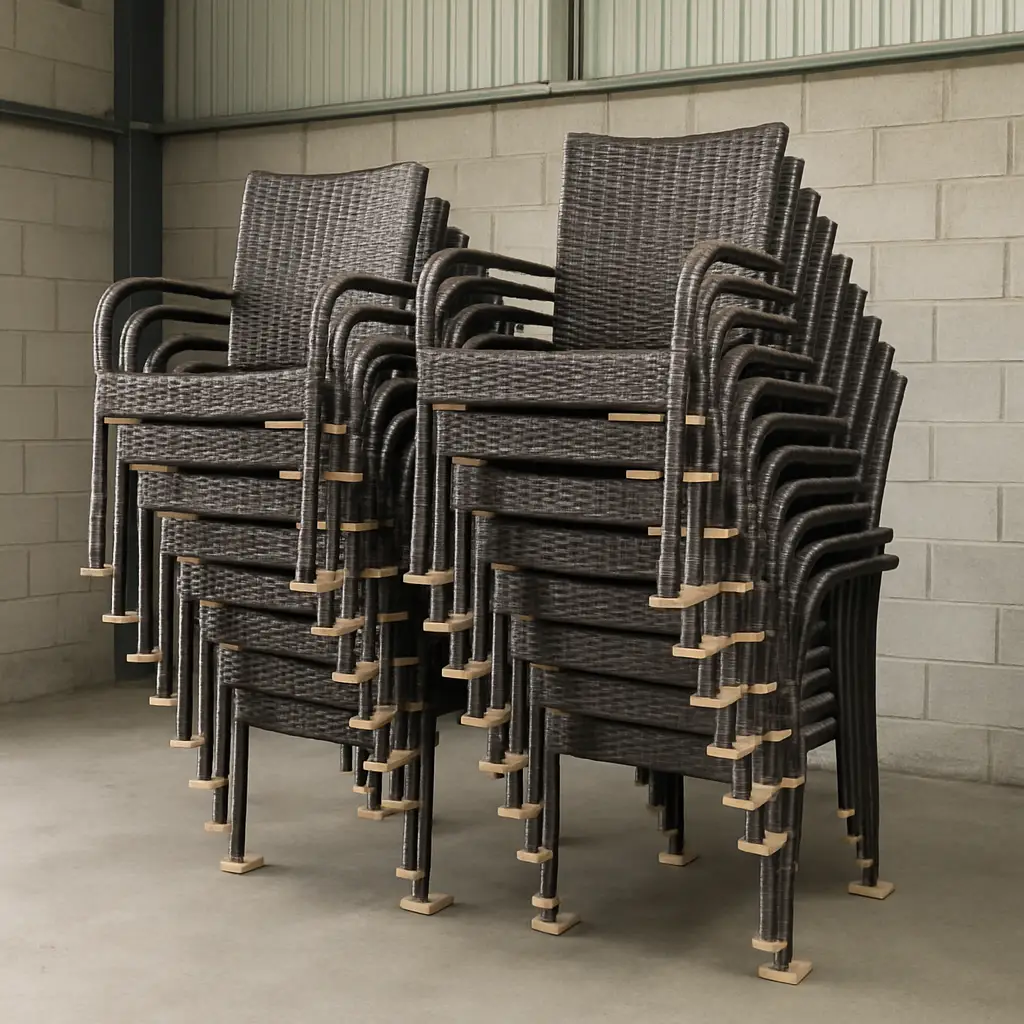
Strategic stacking techniques also play a crucial role in optimizing seasonal storage for bulk outdoor seating. While it is tempting to maximize every cubic inch of warehouse space by packing boxes tightly from floor to ceiling, this approach suffocates the inventory. You must allow for adequate airflow between pallets and rows to prevent stagnant pockets of damp air from forming “micro-climates” that breed mildew. Furthermore, never store wood furniture directly on concrete floors, as the material will wick moisture straight up from the ground. Always use pallets to create a thermal break and a ventilation gap, ensuring the bottom layer of your inventory remains as pristine as the top.
Regular physical inspections of your stock are necessary to catch environmental issues before they ruin an entire shipment. Randomly opening a box every few weeks to check for signs of dryness or musty odors allows you to adjust your climate control strategy proactively. By treating your warehouse as an active preservation environment rather than a passive holding cell, you ensure that the product the customer receives is as durable as the day it left the factory. This attention to detail sets the stage for the final piece of the puzzle: educating your buyers on how to maintain that quality in their own backyards.
The Longevity Secret: Maintaining Wood Furniture in Humid and Harsh Climates
Once the furniture leaves your loading dock, its lifespan depends entirely on how well you educate your customer. A significant percentage of “defective product” returns are actually just cases of improper care, where a buyer unknowingly allows moisture to compromise the wood. By acting as a consultant rather than just a cashier, you can turn maintenance advice into a dual revenue stream: you reduce the cost of processing returns and simultaneously create opportunities to sell high-margin add-ons like covers and treatments.
Distinguishing between oils and sealers is the first step in recommending weather-resistant finishes for commercial wood seating. Many customers believe they must “feed” the wood with teak oil to keep it healthy, but for outdoor inventory, oil is largely cosmetic; it provides a temporary glow but offers minimal protection against moisture and often encourages mildew growth in humid environments. A water-based sealer, on the other hand, creates a breathable shield that prevents water intrusion while allowing internal moisture to escape. If your client wants low maintenance, steer them toward sealers; if they want that rich showroom shine and are willing to re-apply every few months, sell them the oil.
Managing expectations regarding color change is equally vital to preventing panic calls three months down the line. You must explain that quality wooden outdoor furniture will naturally transition to a silver-gray patina when exposed to UV light. This “silvering” is the timber’s natural defense mechanism, not a sign of decay. Rot, by comparison, presents as soft, black spots usually caused by trapped moisture. To prevent this, advise against standard plastic tarps which suffocate the wood; instead, recommend breathable covers that block rain but allow airflow, specifically instructing customers on how to maintain teak furniture in humid climates.
To streamline this education process, consider including this simple “Care Card” with every receipt:
- The Seasonal Scrub: Wash furniture twice a year with mild soapy water and a soft bristle brush to remove pollen and pollution that trap moisture against the grain.
- The Patina Choice: Decide early if you want the “honey” look (requires annual sealing) or the “silver” look (requires no treatment), as switching back later involves heavy sanding.
- The Breathable Cover: Always cover furniture during freezing winter months or extended rainy seasons, but ensure the cover has vents to prevent mold buildup underneath.
By equipping your buyers with this knowledge, you transform a fragile commodity into a durable asset that builds brand trust. With your inventory protected in the warehouse and your customers prepared to care for it at home, the physical risk to your stock is minimized. Now, it is time to focus on the financial risk: ensuring that the price tag on the floor actually covers your overhead and delivers a healthy net profit.
The Math of Markup: Calculating True ROI Beyond the Wholesale Sticker Price
Staring at a wholesale catalog can be deceptive because the listed price is rarely what you actually pay to get the product ready for sale. To protect your bottom line, you must calculate the “Landed Cost,” which combines the initial purchase price with freight fees, insurance, and the wages paid to the staff members unloading the truck. Since solid timber is significantly heavier than aluminum or resin, the shipping costs can eat into your budget faster than you expect, turning a seemingly cheap $50 chair into an $80 investment before it even reaches your showroom floor.
Once you have established your true cost, you can leverage the psychological advantage timber holds in the marketplace. When comparing wood and metal patio furniture profit margins, wood consistently commands a higher “perceived value” from customers who associate the material with luxury and craftsmanship. This natural prestige allows you to set a healthier markup on a teak dining set than you could on a standard steel alternative, providing the financial buffer you need to absorb those higher shipping costs while still securing a net profit.
Another hidden variable in your return on investment is the decision between selling inventory “flat-packed” in the box or paying your staff to build it. While selling boxed items saves critical warehouse space and allows customers to fit purchases in their own vehicles, offering pre-assembled pieces can justify a higher retail price point for “white glove” convenience. You need to weigh the hourly wages of your assembly team against the potential price increase to ensure the extra labor translates to actual income rather than just busywork.
Success in the wholesale furniture market ultimately requires looking at the total financial picture rather than just the daily sales receipt. A high sales volume means nothing if your landed costs and labor overhead are silently erasing your margins on every transaction. With your pricing strategy now calibrated to cover all expenses, the final challenge is handling the inevitable end-of-season slowdown without resorting to panic-driven discounts that destroy your hard-earned profits.
Seasonal Clearing: Strategies to Flush Inventory Without Killing Your Yearly Margin
August arrives, and customer foot traffic naturally slows as the weather cools, often triggering a retailer’s instinct to slash prices immediately. However, panic-driven discounting is the fastest way to erase the profit margins you carefully calculated earlier in the season. Instead of racing to the bottom with 50% off signs, effective clearance strategies for end-of-season patio inventory focus on increasing the perceived value of the purchase rather than simply lowering the cost. The goal is to make the customer feel they are getting more for their money, which preserves your brand’s reputation and your bank balance.
Price isn’t the only lever you can pull to close a sale; emphasizing the origin of your materials can attract a more discerning, less price-sensitive buyer. If your inventory includes FSC certified sustainable wood furniture benefits, now is the time to market that distinction aggressively. Many customers are willing to pay full price—even late in the season—for patio wood furniture stamped with the Forest Stewardship Council (FSC) logo because it guarantees the wood was harvested responsibly. By framing these remaining pieces as ethical, premium investments rather than “leftovers,” you appeal to high-spend buyers who prioritize sustainability over a bargain.
Another powerful tactic to clear space without killing revenue is bundling. This involves taking a slow-moving item and pairing it with a desirable accessory or service to create a package that feels like a luxury upgrade. Consider these high-value combinations:
- The “Turn-Key” Upgrade: Include assembly and delivery for free with any full dining set purchase, trading your labor cost for a full-margin sale.
- The Maintenance Kit: Bundle a gallon of high-quality teak oil and a weatherproof cover with a bench to alleviate the customer’s fear of winter damage.
- The “Host” Package: Attach a lower-cost side table or serving cart to a premium seating group to justify a higher ticket price.
Finally, use your floor models to create a genuine sense of urgency. These display units have already incurred labor costs for assembly and have likely suffered minor wear and tear, making them prime candidates for an “As-Is” immediate sale. Selling a floor model allows you to recoup capital instantly without the hassle of disassembling and re-boxing the item for winter storage. This “cash-and-carry” approach clears your showroom floor efficiently, leaving you with a clean slate as you prepare to implement your roadmap for the coming season.
Your 90-Day Roadmap to a Profitable Patio Season
Moving from simply stocking shelves to managing a high-performing asset class transforms how you approach retail. You now possess the insight to look past the surface beauty of a dining set and evaluate its true potential for profitability, balancing material costs against longevity and customer appeal. Understanding the nuances of this inventory class is no longer a mystery, but a calculated strategy that separates thriving showrooms from those struggling with stagnant stock.
Your immediate focus should shift toward logistical precision to ensure your capital is not tied up in transit. Start by creating a custom ordering calendar that accounts for manufacturing lead times and shipping delays, ensuring your floor is full exactly when the weather turns warm. Successfully sourcing wholesale patio furniture for resale requires you to align these delivery windows with your peak traffic periods, preventing the twin dangers of early season stockouts and end-of-season liquidation sales.
Protecting your margin also means protecting the physical product while it remains in your care. Take time this week to audit your storage areas for proper ventilation and humidity control, as environmental factors can degrade wood quality long before a customer sees it. Simultaneously, draft a simple maintenance cheat sheet for your sales team, empowering them to educate buyers on care requirements which effectively reduces post-purchase complaints and return rates.
Merchandising natural materials carries a responsibility to quality that plastic alternatives cannot match, but the rewards are significantly higher for those who prepare correctly. By treating your inventory as a living investment rather than static boxes, you position your business as a trusted authority in the outdoor living space. You have the tools to navigate the market with confidence, turning every square foot of your storage space into a reliable engine for growth.